
Most conversations about AI in sports start with a polished demo: computer vision tracking every player, predictive models forecasting injuries, dynamic ticket pricing that maximizes revenue per seat. The technology is real. The problem is that very few of these projects survive contact with the people who actually have to use them.
A performance director who does not trust a fatigue model will ignore it. A fan who suspects dynamic pricing is gouging them will buy from a reseller. A league that cannot explain an officiating recommendation to a broadcast audience will shelve the system before the second season.
This guide is about building AI sports products that reach production and stay there, because the humans in the loop actually trust them.
Where AI Creates Operational Value in Sports
Before selecting a model architecture, it helps to be specific about where AI generates measurable returns. Four areas consistently produce results when scoped correctly.
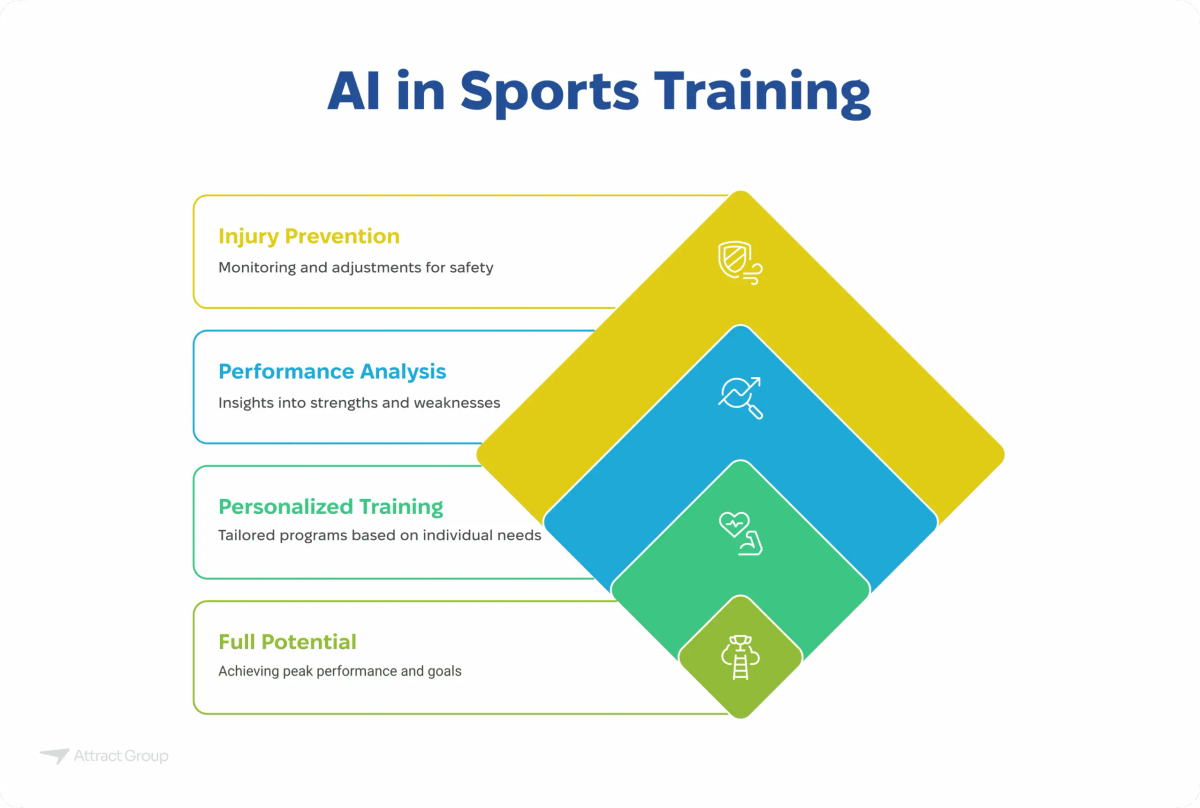
Athlete performance and workload management. Wearable sensors, GPS trackers, and force plates generate continuous streams of biomechanical data. Models can flag asymmetric loading patterns or cumulative fatigue thresholds, but the output is a recommendation to a sports scientist, never an autonomous decision about whether an athlete trains.
Video and event data. Computer vision systems tag game events such as passes, shots, and defensive formations at a speed and granularity that manual tagging cannot match. The output feeds coaching workflows: pre-game preparation, post-game review, opponent scouting reports.
Ticketing and fan-facing products. Demand forecasting models adjust pricing tiers, recommend seat upgrades, or personalize content feeds. These models interact directly with revenue, which means they also interact directly with fan trust.
Officiating support. Ball-tracking and body-pose estimation can provide referees with supplementary data. The word "supplementary" matters. Every major league that has deployed officiating technology has learned that the final call must remain with a human official, or public confidence erodes.
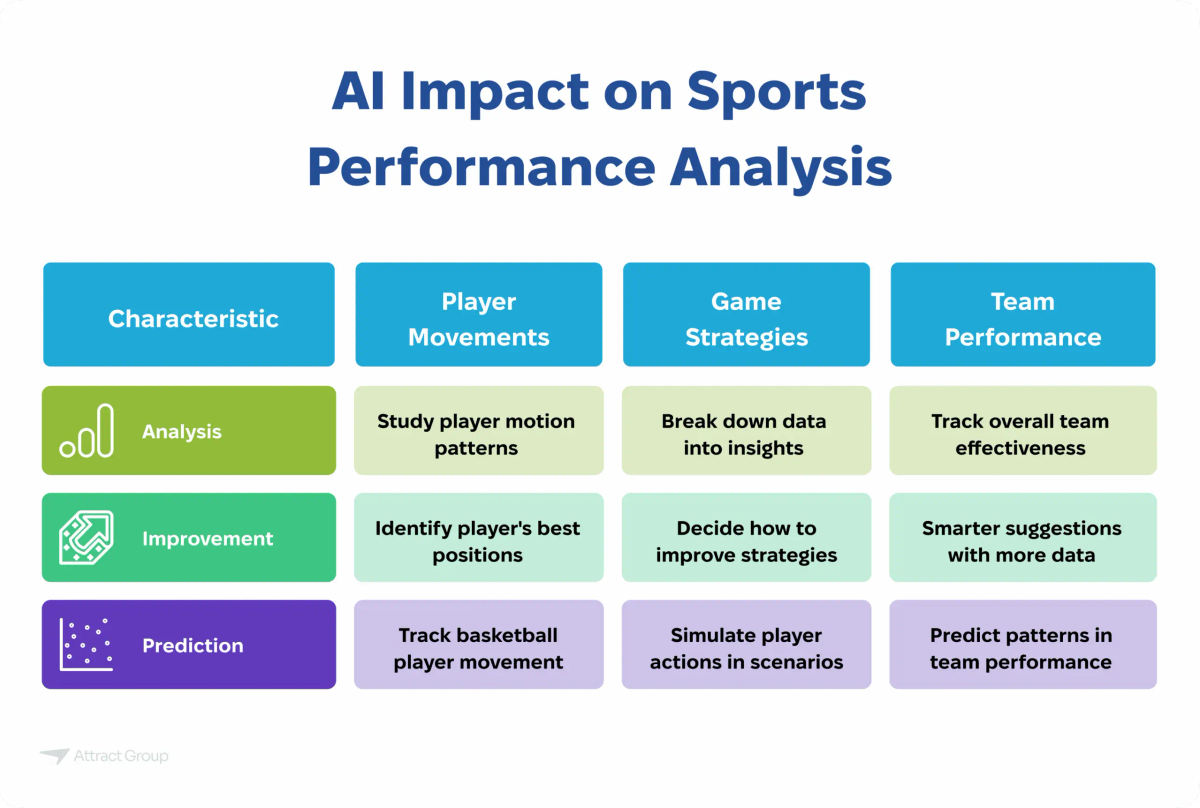
The common thread across all four areas: the model produces an output, and a qualified human decides what to do with it. That principle should be baked into your product architecture from day one.
Start With an Operating Decision, Not a Model
The most expensive mistake in sports AI is building a model before defining the decision it supports. A machine learning model is a component inside a decision workflow. If you cannot describe the workflow on a whiteboard, you are not ready to train anything.
Start by answering five questions:
- Who makes this decision today? A head coach, a ticket operations manager, a medical officer.
- What information do they use? Spreadsheets, video clips, gut feel, last season's data.
- Where does the current process break down? Too slow, too inconsistent, missing data, cognitive overload.
- What would a useful model output look like? A ranked list, a probability score, a flagged anomaly, a suggested price band.
- What happens when the model is wrong? This question determines your tolerance for error and your need for human review.
If you skip this step, you end up with a technically impressive model that nobody uses because it does not fit into anyone's actual workday. Google's own ML guides reinforce this principle: define the problem before collecting data.
Data, Consent, and Governance Before Model Development
Sports data carries unique governance risks that general-purpose AI playbooks do not address.
Athlete biometric data is health data. In most jurisdictions, heart rate variability, sleep quality, and injury history fall under medical data regulations. In the EU, GDPR classifies this as special-category data requiring explicit consent. In the US, state-level biometric privacy laws (Illinois BIPA, for example) create litigation risk. Your architecture must separate medical data stores from performance analytics stores, with distinct access controls and audit trails.
Minors are everywhere in sports. Youth academies, college programs, and development leagues involve athletes under 18. Consent frameworks must account for parental or guardian authorization, data retention limits, and the right to deletion when a young athlete leaves a program.
Bias in training data is a structural problem. If your injury prediction model is trained primarily on data from male athletes in one sport, it will perform poorly for female athletes or athletes in different sports. Bias audits should happen before deployment, not after a failure.
Consent is ongoing, not one-time. Athletes join and leave teams. Their data should follow consent boundaries, not organizational convenience. Build consent management into your data layer, not as an afterthought in a settings menu.
A solid AI integration foundation handles these requirements at the infrastructure level: role-based access, data lineage tracking, automated retention policies, and separation of concerns between raw sensor data, derived analytics, and personally identifiable information.
Build and Validate an AI Sports Product
Once you have a defined decision, a governed data pipeline, and consent infrastructure, you can start building. Here is a staged approach that reduces risk.
Stage 1: Shadow mode. Deploy the model alongside the existing human process. The model produces outputs, but no one acts on them. You compare model recommendations against actual human decisions over 4-8 weeks. This builds an evidence base and surfaces failure modes before anyone depends on the system.
Stage 2: Advisory mode. Present model outputs to decision-makers as one input among several. Track adoption rate: how often do coaches, analysts, or operators actually use the recommendation? If adoption is below 40%, the problem is usually UX or trust, not model accuracy.
Stage 3: Integrated mode. The model output becomes a default part of the workflow, with human override always available. Audit trails log every recommendation, every override, and the outcome. This data feeds continuous model improvement.
Stage 4: Continuous validation. Models degrade. Player populations change, rule changes alter game dynamics, sensor hardware gets upgraded. Schedule quarterly revalidation against fresh data. Quality assurance processes should include model performance regression testing alongside traditional software QA.
For production pipeline architecture, TensorFlow's documentation on serving and production deployment provides solid reference patterns for model versioning, A/B testing, and rollback procedures.
Latency matters more than you think. A coaching staff reviewing post-game analytics can tolerate model inference times measured in minutes. A live broadcast officiating system needs sub-second responses. A dynamic pricing engine updating during a ticket sale needs responses in milliseconds. Define your latency budget early; it drives your entire infrastructure decision, from edge computing to cloud deployment. Working with experienced DevOps and cloud teams prevents costly re-architecture later.
Decision Table: AI Use Cases in Sports
| Use Case | Input Data | Model Output | Human Owner | Failure Mode |
|---|---|---|---|---|
| Workload fatigue flagging | GPS, accelerometer, session RPE, sleep data | Risk score per athlete per session | Sports scientist / medical staff | False negative misses overload; false positive restricts healthy athlete from training |
| Opponent tactical scouting | Tagged video events, formation data | Probability distributions of opponent plays by game state | Head coach / analyst | Model trained on outdated opponent data; coaching staff over-relies on predicted tendencies |
| Dynamic ticket pricing | Historical sales, event calendar, weather, opponent strength | Suggested price band per section per game | Revenue operations manager | Price spikes perceived as gouging; model underprices high-demand games |
| Officiating ball-tracking | High-speed camera feeds, calibrated court/field geometry | Ball position relative to boundary with confidence interval | Referee / review official | Calibration drift produces inaccurate tracking; low-confidence outputs presented without uncertainty context |
| Personalized fan content | App engagement history, purchase data, location | Ranked content feed and push notification timing | Marketing / fan engagement team | Filter bubble reduces content diversity; notification fatigue increases opt-out rates |
This table is not exhaustive, but it illustrates the pattern: every use case has a human owner and a known failure mode. If you cannot fill in those two columns, you are not ready to build.
Buy, Integrate, or Build
Not every AI capability needs to be built from scratch. The decision framework is straightforward.
Buy when the capability is commoditized and your competitive advantage lies elsewhere. Video tagging platforms like Hudl or Stats Perform offer mature products. If your differentiation is not in video tagging, do not build a video tagging system.
Integrate when a vendor provides a strong foundation but your workflow requires customization. Most ticketing AI falls here: you might use a vendor's demand forecasting engine but build custom business rules on top.
Build when the capability is your competitive moat, when the data is proprietary, or when no vendor serves your specific sport or league context. Custom athlete performance models trained on your organization's longitudinal data are a common example. Custom software development makes sense here because the product is tightly coupled to your operational context.
A hybrid approach is common and practical. Buy commodity layers, integrate where vendors are close but not exact, and build where your data and domain expertise create something no vendor can replicate.
Questions to Ask a Delivery Partner
If you are working with an external team to build AI capabilities, these questions separate experienced partners from those who will learn on your budget:
- How do you handle model versioning and rollback in production? If the answer is vague, they have not shipped models that real users depend on.
- What is your approach to bias auditing, and at what stage does it happen? It should happen before deployment, with a documented process.
- How do you separate PII and medical data in your architecture? Look for answers that reference infrastructure-level separation, not application-level filtering.
- Can you describe a project where a model was deployed and then pulled back? Honest partners have these stories. Partners who claim 100% deployment success rates are either very new or not being candid.
- What does your monitoring look like after launch? Model drift detection, performance dashboards, and alerting thresholds are signs of production maturity.
- How do you handle consent management for data subjects who leave the organization? This is a sports-specific question that generic AI vendors often stumble on.
Practical Next Step
Pick one operating decision in your organization that is currently made with incomplete data or inconsistent methodology. Map the five questions from the "Start With an Operating Decision" section above. Document the current workflow, the data sources available, and the failure modes you can already anticipate.
Then run a four-week shadow test: collect the data, build a minimal model, and compare its outputs against actual human decisions without changing any real workflows. You will learn more from this exercise than from any vendor demo or conference presentation.
The organizations that succeed with AI in sports are not the ones with the most sophisticated models. They are the ones that defined the decision first, governed the data properly, validated in stages, and kept a human in the loop at every point where trust matters. That is not a technology problem. It is a design discipline.