Attract Group Logo
Attract Group Logo
Services

Legacy application modernization services

We replace old business systems in stages, while they keep running.

Most of these projects go wrong in the same place: the cutover. So we do not do cutovers. The new system runs beside the old one, both live, data moving both ways, until there is nothing left to move. Your people keep their logins. Your customers notice nothing. If the programme stops after the first stage, you still own software that works.

15+ yearsSystems that cannot pause since 2011
50+ specialistsEngineers on staff
Fit

Is this you?

Four situations bring people here, and they need different first moves.

01

Nothing new can talk to it

The system works, but every project now starts with "except for that system".

02

It cannot be patched

An auditor flagged it, or a customer's security review did, and "it has always been like this" stopped working as an answer.

03

The person who understood it has gone

There is no documentation, and every change is now guesswork performed carefully.

04

It cannot carry the volume you do now

The design was right ten years ago.

Options

Rebuild, refactor, or leave it alone

There are six honest answers, and one of them is that you should not touch it yet.

OptionWhat it meansRight whenThe catch
Leave it, contain itPut an API in front, monitor it, stop adding featuresIt is stable and not blocking anythingThe problem is postponed, not solved
RefactorSame design, better codeThe design is sound, the code has decayedLowest risk, no new capability
ReplatformSame system, supported runtimeSupport or compliance is the blockerFixes the audit, not the design
Re-architectSplit it so parts change separatelyParts of it need to move at different speedsReal cost, needs sequencing
Rebuild beside itNew system takes over one function at a timeThe design is the constraint and the business cannot pauseMost expensive, and the only one that ends the problem
RetireFold it into something you already ownIt does less than it appears toCheapest outcome, rarely offered to you

When we rebuild, we use the strangler pattern: the new system takes one capability at a time while the old one keeps serving the rest. It is slower than a full rewrite. It is also why none of our clients had a dark weekend. If you are modernising several applications rather than one system, start there instead.

Continuity

How we work without stopping the business

Four mechanics do most of the work here.

01

One login across both systems

A user who signs in to either is signed in to both. Nobody re-registers. That single request is what usually turns an internal project into a customer complaint.

02

Changes sync both ways

Within seconds, which is what makes "both systems live" a real state instead of a migration window with a deadline.

03

Every record keeps its trail

Every record in the new system carries the identifier of the record it came from. Six months later, "did the migration break this?" has an answer instead of an argument.

04

Each stage ships something usable

And has a way back. Stop after stage one and you own working software, not half a migration.

Nothing here should land on you personally. The business should not be able to tell which week the switch happened.

Examples

Two systems we replaced while they were running

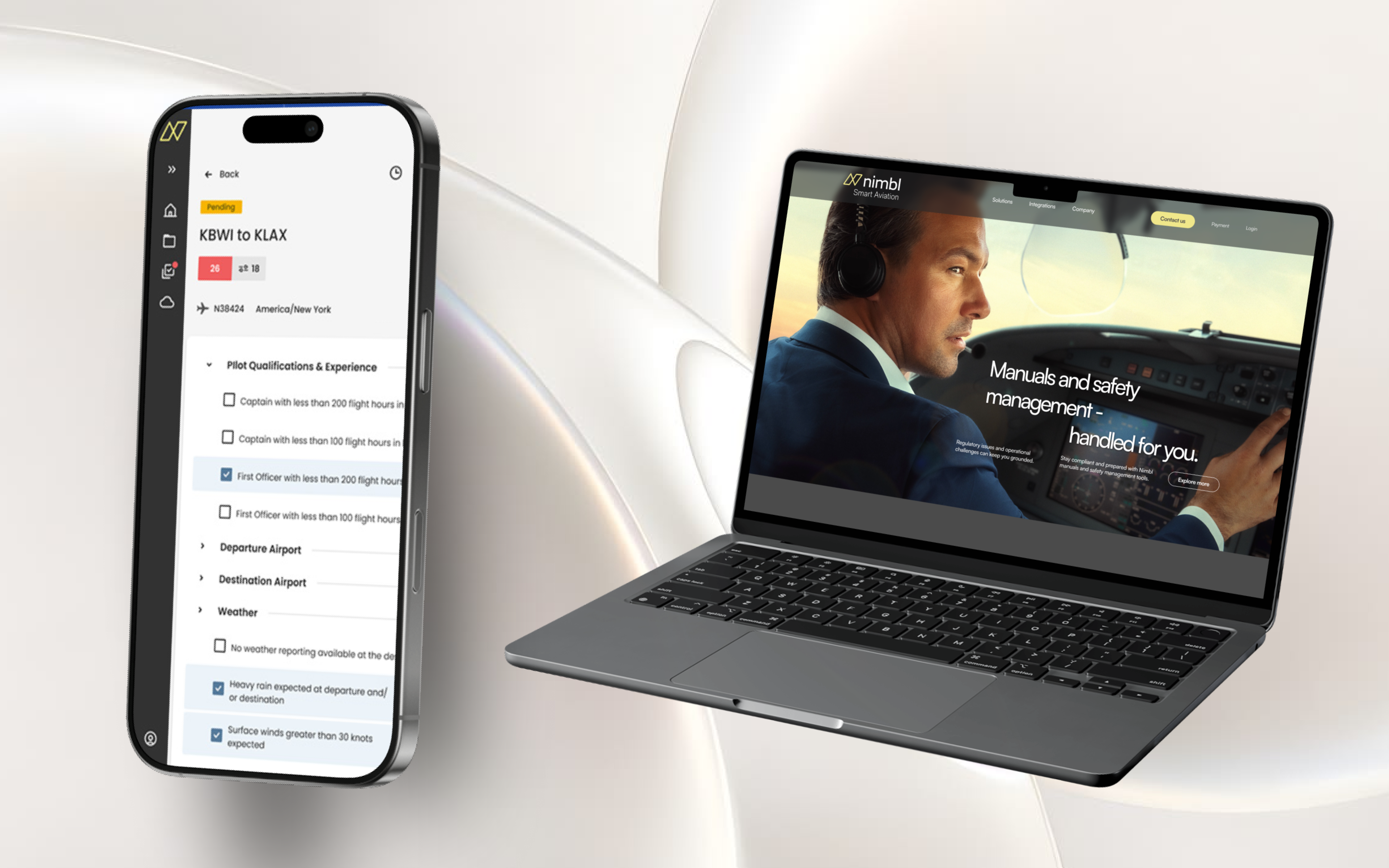
Aviation manuals modernization platform

A new platform beside a live one, and nobody re-registered

A US provider of aviation compliance software writes flight operations manuals for business aviation and sells the compliance software its customers use daily. Producing a manual still ran on email: forms sent back and forth, drafts as attachments, approval as a reply saying "looks good", and nobody able to see where a project stood without asking.

We built the portal that replaced that. The constraint was the old system, which already had a live customer base and was not going anywhere. So the new portal shares a login with it. Sign in to either, you are in both. A change in one appears in the other within seconds. The mobile app talks to both back ends on purpose: the new one for everything current, the old one for the document library that had not moved yet. Every record shows its counterpart in the old system. 51 database migrations, 15 API modules, 21 notification types, built between August 2023 and April 2025.

Read the aviation manuals case study
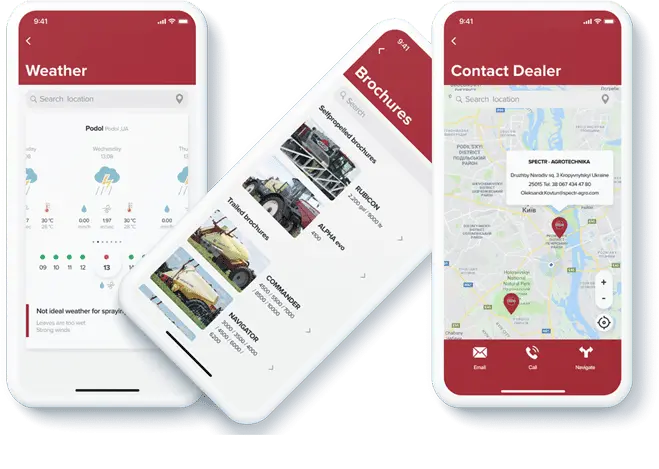
MyHARDI owner portal application

Seven years, three generations of technology, one product that never went away

MyHARDI is the owner portal for a global maker of crop spraying equipment. We have been building it since February 2019 and it is still in development now. Two full mobile rebuilds in that time, and neither needed a data migration, because every client has always talked to the same API. The owner base was moved across rather than asked to register again, and both app rebuilds kept their original App Store and Play identities, so users updated an app instead of hunting for a new one.

Read the MyHARDI case study
Process

How the work runs

2 to 4 weeks

Assessment

What the system does, what depends on it, your options with a cost against each, and our recommendation. Written for the person who signs.

2 to 4 months

Stage one

One capability moved into production, with a way back

Agreed one at a time

Following stages

The rest, in the order that suits the business

Ongoing

Support

The same engineers, who by then know the system

Pricing is scoped after the assessment — custom to the system, not a rate card. You get a fixed scope and a fixed price for stage one. You never buy a programme on an estimate.

Next step

Start with the assessment

Two to four weeks, a fixed-price scope, and a document that says what your options are and what we would do. Useful even if you hire someone else.

AI on this work

Where AI helps on this work, and where we stop

AI tooling reads old code far faster than we could two years ago, which is why an assessment on an undocumented system now takes weeks instead of months and the estimate behind it is tighter. It also writes the tests around behaviour you need preserved, at a volume that used to be hard to justify inside a fixed price. That is what makes a staged switch safe rather than hopeful.

We do not let it decide the architecture, write the migration rules, or touch anything involving money or compliance. Nothing reaches production without a named engineer having read it. Code that nobody on the team understands is a new legacy system with a delay on it, which would be a strange thing to hand you.

You own the code, the repository and the documentation. Your code and your data never train anything.

Awards & Recognition

Tech Behemoths Trusted On partner badge — Attract Group

CLIENT REVIEWS

What Our Clients Say

5.039 VERIFIED REVIEWS ON CLUTCH
Maurice Darbyshire
Maurice Darbyshirein
Founder, CASSA

Attract Group's efforts resulted in a bug-free app that beta users could easily navigate. The team provided frequent updates on their progress and was highly accommodating throughout the engagement. Attract Group was organized and responsive.

Pavel Yeliseev
Pavel Yeliseevin
CTO, Libernetix

Attract Group provides outstaffing services for a fintech company. They take the time to better understand our requirements and provide the best options. Attract Group delivers on time, and their communication is quick.

Fathi M. Albatie
Fathi M. Albatiein
Broadcast Project Lead, SportHub

Attract Group has deployed top-notch professionals who manage the project efficiently and ensure timely delivery of outputs. They also impress us with their transparency in their technical skills and business consulting values.

0103 / 06 CURATED · 39 TOTAL ON CLUTCH

FAQ

Questions we get asked

How do you choose between refactoring, rebuilding and retiring?+

By what is actually constraining you. Sound design with decayed code gets refactored. A support or compliance problem gets replatformed. If the design itself is the constraint and the business cannot pause, we rebuild beside it. And if the system does less than it appears to, we say so and fold it into something you already own.

Can you work on a system with no documentation?+

Yes, and most of what we do looks like that. We start from the running system: what production actually does, which paths carry volume, what the database is really storing. You keep the documentation we write whether or not you continue with us.

Can you do this without downtime?+

Yes, and that is the whole point of running both systems at once. One login across both, changes syncing both ways, and one capability switched at a time instead of a weekend everyone dreads.

What happens to our data?+

It moves with a trail. Every migrated record keeps a pointer to where it came from, so any question about accuracy can be checked against the source instead of argued about.

How long does this take?+

Two to four weeks for the assessment. Two to four months for the first capability in production. Six months to two years for a full programme, sequenced so that stopping between stages still leaves you with working software.

Do you replace our developers?+

No. They know the system and the business. We take the part their roadmap cannot absorb, and we write things down as we go, which is usually what your team wanted and never had time for.

Request a technical audit

Tell us what the system does, what is blocking you, and whether downtime is acceptable. We will reply with a clear next step and a fixed-price assessment scope.

Or call us directly:+1 888-438-4988

Request a technical audit

Your data will never be shared with anyone.