Get your applications into a state where the next thing you want to build is possible.
Modernization budget rarely gets approved on its own merits. It gets approved because something else is stuck: an integration, a channel, a compliance deadline, or an AI project that hit a wall when the data and the APIs turned out not to exist. So we work backwards from the thing you want. What has to be true in your applications for it to happen, and what is the shortest route there that does not freeze the roadmap.
Application estates that need to integrate, change and scale without freezing the roadmap
Fit
Is this you?
01
You cannot put AI on top of what you have
The mandate exists and so does the budget. The applications have no APIs, the data sits in shapes nobody can query, and two systems disagree about the same customer.
02
Integration is the bottleneck in every project
Each new system needs a hand built connection to three old ones, and integration is now the biggest line in every estimate.
03
Too many applications and no agreed order of work
Twelve systems, four of them frightening, and a board asking for a plan.
04
Release pace is set by your slowest application
Everything ships together, so everything ships as rarely as the riskiest part allows.
AI readiness
Why AI projects stall on old applications
They rarely stall on the model. They stall because the applications cannot answer a question in real time, and Gartner expects 60% of AI projects without AI ready data to be abandoned through 2026. Four things have to be true before an AI feature is worth starting, and all four are ordinary application work.
01
Current answers, not nightly exports
Something has to be able to ask your systems a question and get a current answer. A nightly export is a report, not a platform.
02
One meaning for shared data
Data has to mean the same thing everywhere it appears. Two customer tables with different rules is the reason an assistant will be confidently wrong.
03
Applications announce what happens
An order was placed, a status changed. Automation reacts to events, and most old systems store the result silently instead.
04
Permissions have to be real
Once a system answers questions in plain language, "who is allowed to know this" stops being an interface problem and becomes an access control problem.
We build those four as groundwork, not as an AI project. If the AI initiative gets cancelled, you still have an estate that can integrate, which is worth having anyway.
Services
What we do
01
Portfolio assessment
Every application scored on business risk and on how much it blocks what you want next, with a recommended order and a cost against each step.
02
API and integration layer
A managed interface in front of the systems you are not replacing, so everything else can move without waiting for them.
03
Re-architecture
Splitting a system so its parts change at different speeds, when the volume or the team structure justifies it. We will tell you when it does not.
04
Event driven design
Actions raise events and separate listeners handle the consequences, so the next integration is configuration rather than a project.
05
Data groundwork
One authoritative source per entity, written down, with the migrations that get you there.
06
Runtime and platform work
Containers, managed services and CI/CD, so deployment stops being the reason releases are rare.
07
Consolidation and retirement
Fewer applications is a legitimate outcome and often the cheapest one.
Sequencing
How we decide what moves first
Two questions, four answers, and a sequence you can defend in a board paper.
Blocking a lot
Blocking little
High business risk
First. Most value, most urgency
Contain it: API in front, monitoring, no new features
Low business risk
Quick wins. Usually the cheapest value in the estate, usually ignored because it is not the scary one
Leave alone, in writing, with a review date
You get a sequence with a cost and a duration against each step, and the freedom to stop after any of them.
Examples
Two estates we worked on
For one business critical system rather than an estate, see legacy modernization.
One API, four generations of client applications
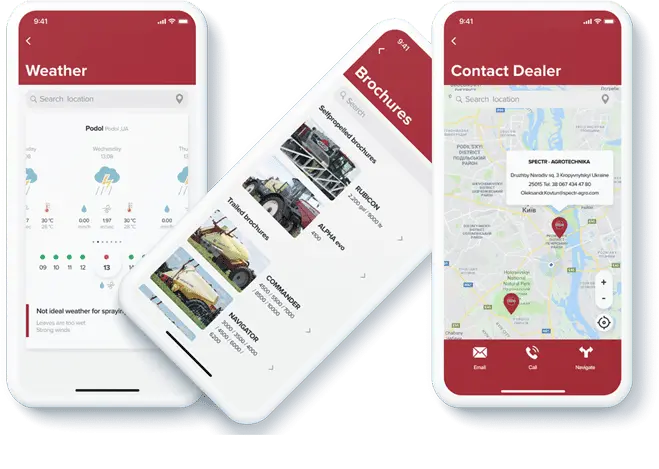
MyHARDI is the owner portal for a global crop spraying manufacturer, in continuous development with us since February 2019. The whole front end has been replaced twice in that time, including two full mobile rebuilds, and none of it required a data migration or a second back end. The reason is dull and architectural: every client has always been a token authenticated consumer of the same interface, so the interface outlived three generations of the things that used it. Around 1,360 commits, 48 database migrations, 11 language and unit variants.
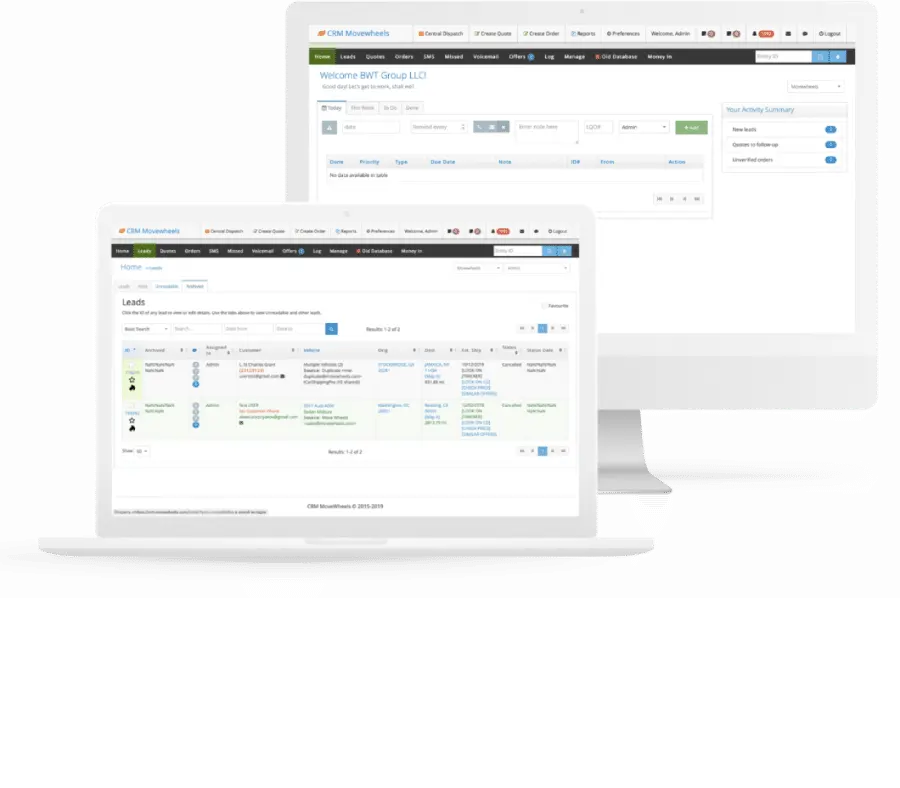
A vehicle shipping platform we built and ran carries 455 database migrations, 186 data models, 729 templates and 22 order statuses. Its complexity is the business's complexity, and it stayed coherent because the structure was maintained instead of patched.
Work starts from $10,000 for an assessment or one contained piece of work.
Engagement
Range
Duration
Portfolio assessment, or one contained piece of work
from $10,000
2 to 4 weeks
Stage one, an API layer or one application modernised
$25,000 to $60,000
2 to 4 months
Multi application programme
$100,000 to $400,000+
6 to 24 months, stoppable between stages
Continued development and support
from $4,000 per month
ongoing
What moves the number: how many applications and how much they overlap, the number of integrations, how many systems claim the same truth, testing maturity, compliance obligations, and whether your team works alongside us.
You can start with one application and one number.
Next step
Start with an assessment
Two to four weeks. Every application scored, a sequence with costs against it, and a recommendation that includes the applications we would leave alone.
“Attract Group's efforts resulted in a bug-free app that beta users could easily navigate. The team provided frequent updates on their progress and was highly accommodating throughout the engagement. Attract Group was organized and responsive.”
“Attract Group provides outstaffing services for a fintech company. They take the time to better understand our requirements and provide the best options. Attract Group delivers on time, and their communication is quick.”
“Attract Group has deployed top-notch professionals who manage the project efficiently and ensure timely delivery of outputs. They also impress us with their transparency in their technical skills and business consulting values.”
01–03 / 06 CURATED · 39 TOTAL ON CLUTCH
FAQ
Questions we get asked
What does application modernization actually mean?+
Changing applications so they can integrate, change and scale, through APIs, events, re-architecture, data structure and runtime, instead of replacing all of them. Most estates need three or four different treatments across their applications rather than one strategy applied everywhere.
Which application should we modernise first?+
The one blocking the most valuable thing you cannot do today. Not the oldest, and not the one people are most afraid of. We score each application on business risk and on how much it blocks, and the order falls out of that.
We need to add AI features. Where do we start?+
With interfaces, data shape, events and permissions. An AI feature sitting on applications that cannot answer in real time, or where two systems disagree about the same customer, will be confidently wrong, which is worse than shipping nothing. This is why AI initiatives so often turn into modernization budget.
Do you always recommend microservices?+
No. Splitting a system is justified when parts of it genuinely need to change at different speeds, or when the team structure demands it. Otherwise it turns a manageable application into a distributed system with the same problems and a new set of failure modes.
What about the cloud?+
We modernise runtimes with containers, managed services and CI/CD, and we stay platform agnostic. We are not reselling a cloud vendor's programme, so we have nothing to gain from the recommendation, and we do not claim partner status we do not hold.
How is this different from your legacy modernization service?+
Legacy modernization is about one business critical system and what to do with it. This page is about an estate and the architecture across it. Plenty of clients start with one and end up needing both.
Request an application assessment
Tell us what is stuck: an integration, a channel, a compliance deadline, or an AI project that hit a wall. We will reply with a clear next step and a fixed-price assessment scope.