Ask your ERP in plain English
A supervisor types a question and gets the answer from ERP and shop-floor data, with links to the records. No new report for every new question.

We engineer software around how your operation actually works.
Starting with your data
We build AI into your software where it saves your team time: answers from ERP data in plain English, and earlier warnings when something is about to go wrong. One workflow, a clear baseline, data you already have. If the data isn't ready, we fix that first.
Sound familiar?
The demo looked good, then the pilot quietly stopped. The reasons tend to repeat.
AI on top of a shaky process mostly makes the shaky parts fail faster. We fix the process first, then add AI where it clearly helps.
Use cases
The projects we'd look at first, because the data usually exists and the result is easy to measure.
A supervisor types a question and gets the answer from ERP and shop-floor data, with links to the records. No new report for every new question.
Watches open orders, stock, supplier dates and machine plans, and flags jobs at risk days before they slip. Planners get a short list each morning.
Built from order history, seasonality and customer patterns. Sometimes a tuned statistical model beats a neural network, and we use whichever works on your data.
Cameras and image models check parts at a fixed station. Borderline parts go to an inspector, so the model supports people instead of overruling them.
AI reads RFQs and drawings and prepares a first estimate for your estimator to check.
Configurator & CPQ →Machine data shows unusual patterns before a breakdown.
Industrial IoT →AI consulting services for manufacturing
If most answers are "no", the first project is a data project, and that's fine.
Honest scope
A lot of "AI projects" are really reporting or integration projects. If one of these solves the problem, that's what we'll build. It's cheaper to run, and AI can still go on top later.
Process
You see working software early, and scope or budget changes are agreed first. We use AI in our own work too; the quality of what we deliver stays on us.
Security
Models run in your cloud account or a private environment we set up.
Your production data isn't used to train public models.
Access follows the same roles you already use in your ERP.
Every answer traces back to its source records.
Proof
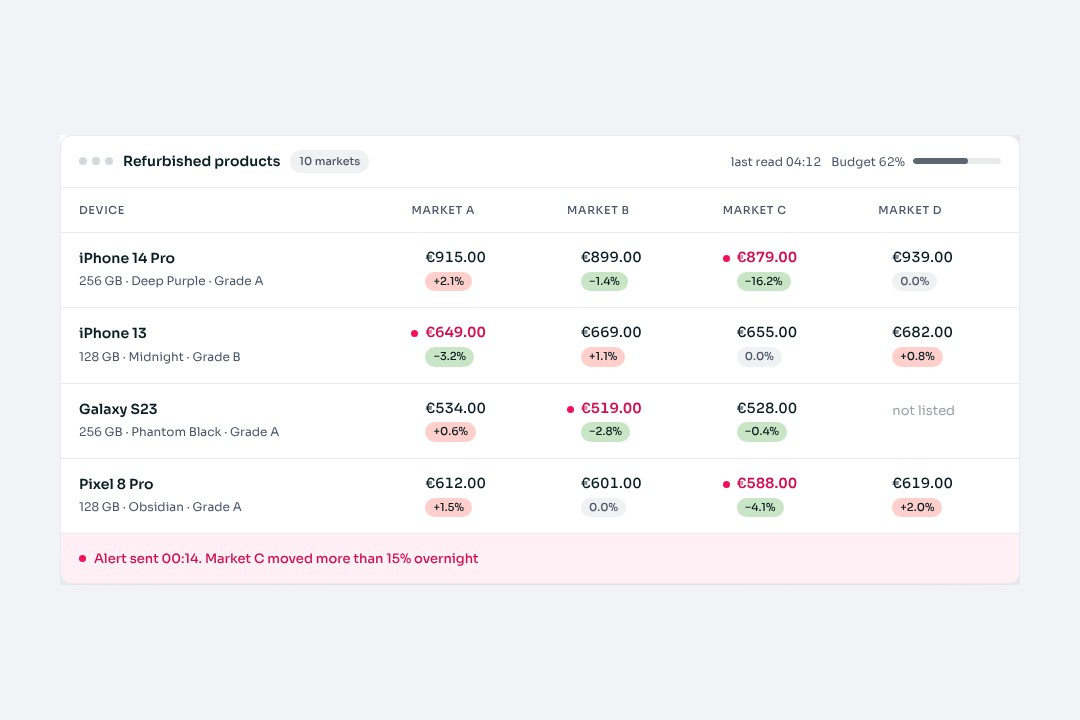 E-commerce · nightly data pipeline and alerts
Reads prices across ten marketplaces every night and flags a 15% move the same night. It also tells a site that's down apart from one that was redesigned.
View case study →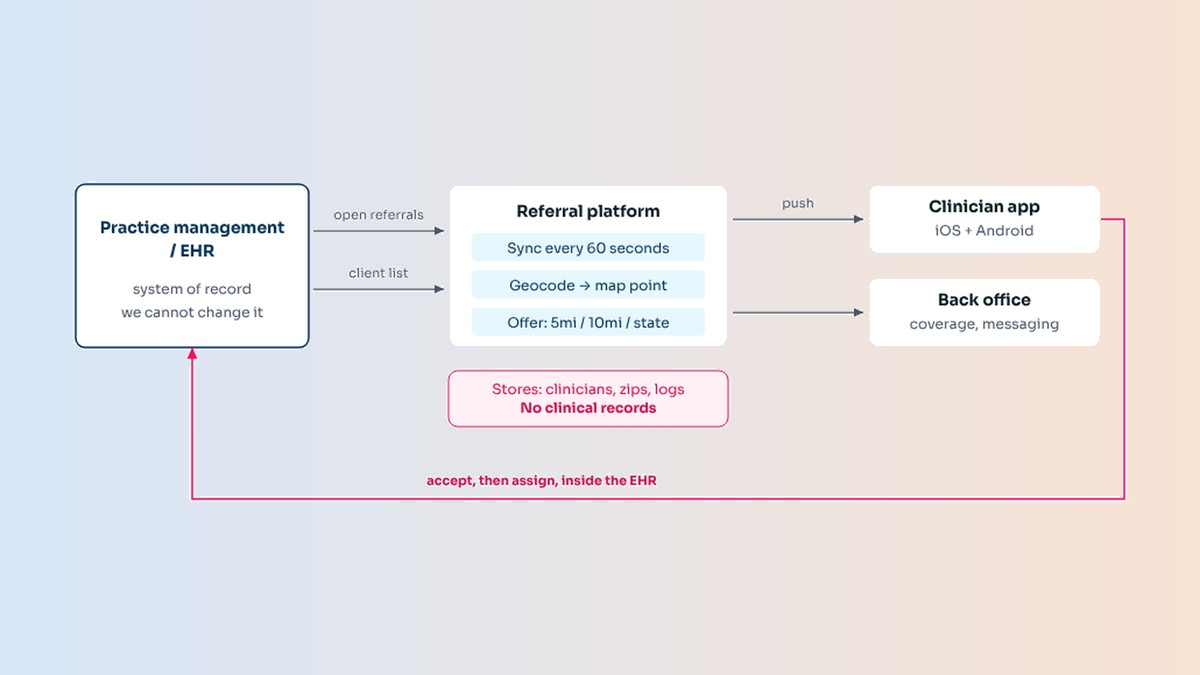 Healthcare · built on top of a system of record
Reads open referrals from the existing record system every minute and writes results back. Sensitive data never leaves the system it lives in.
View case study →FAQ
Often partly. The five questions above give a quick read. A readiness check looks closer at the systems involved and tells you what to clean up first.
The one where you can measure the result and the data already exists. Plain-English answers from ERP data and shortage alerts are common first picks, because they save planners and supervisors time from week one.
Yes. We connect to the ERP and other systems you run today and show results inside the screens your team uses. Replacing the ERP isn't part of it (Custom ERP).
For anything that affects cost, quality or a customer, the model makes a suggestion and a person approves it. You decide where that line sits.
Answers cite the records they come from, so people can check them. We limit what the model can do on its own, test it against real cases before launch, and monitor accuracy afterwards.
A clear baseline, one workflow at a time, results inside your existing tools, and someone who tells you when AI isn't the right answer. Also ask who owns the code and the trained models. With us, you do.
Cost follows the workflow, the data work needed and the systems involved. After the readiness check you get a scope and estimate, agreed before any build starts.
That's often the best place for AI to start. Book a readiness check, and we'll look at your data and one workflow with you.