
Hospital management software development services
Most hospitals run four systems that half-overlap and a stack of workarounds holding them together. We build custom hospital management software around the departments you actually have, integrate it with the EHR you are keeping, and hand you the code.
Healthcare platforms we have shipped
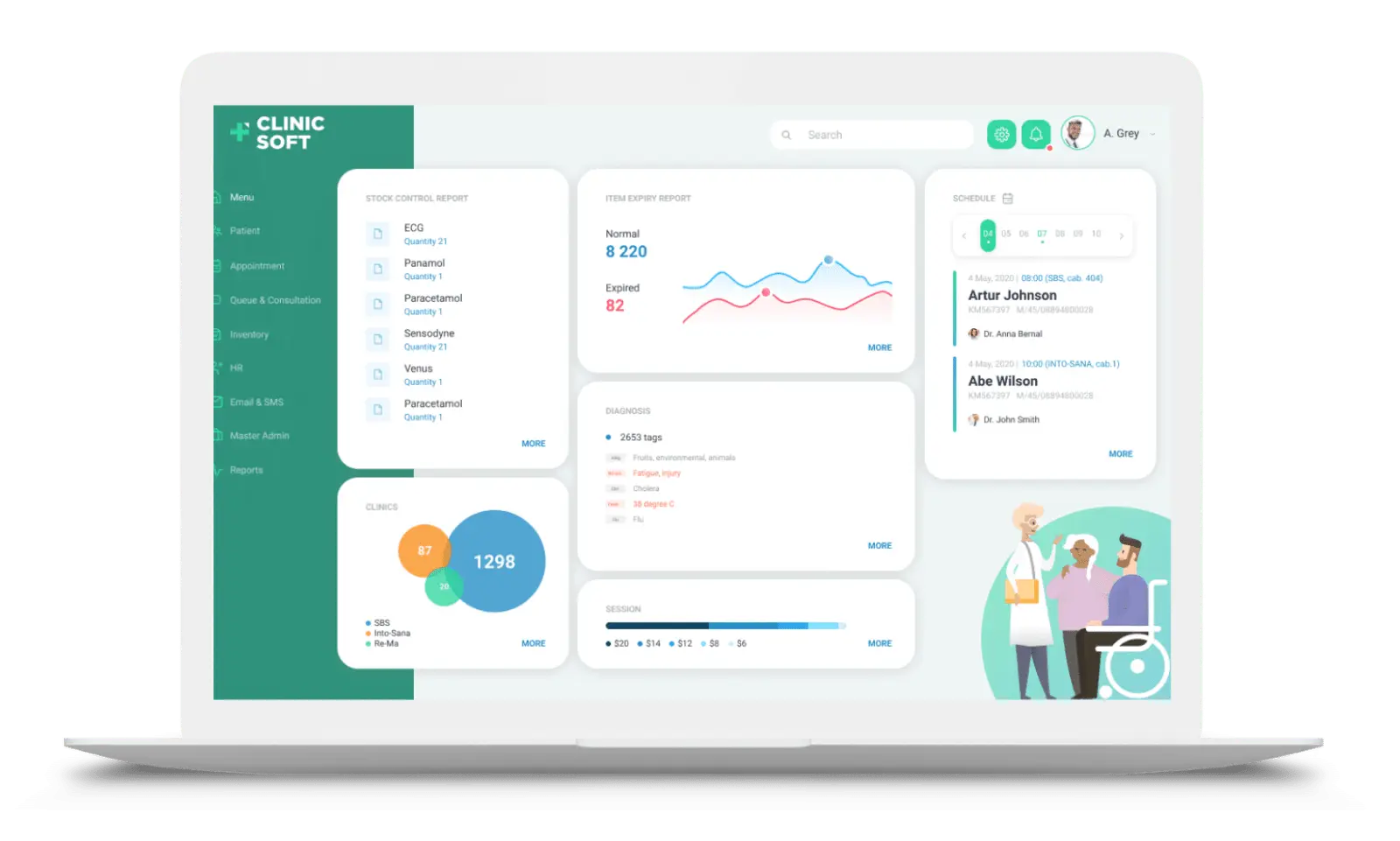
Clinicsoft
Healthcare CRM for patient workflows, appointments and clinic operations across medical institutions.
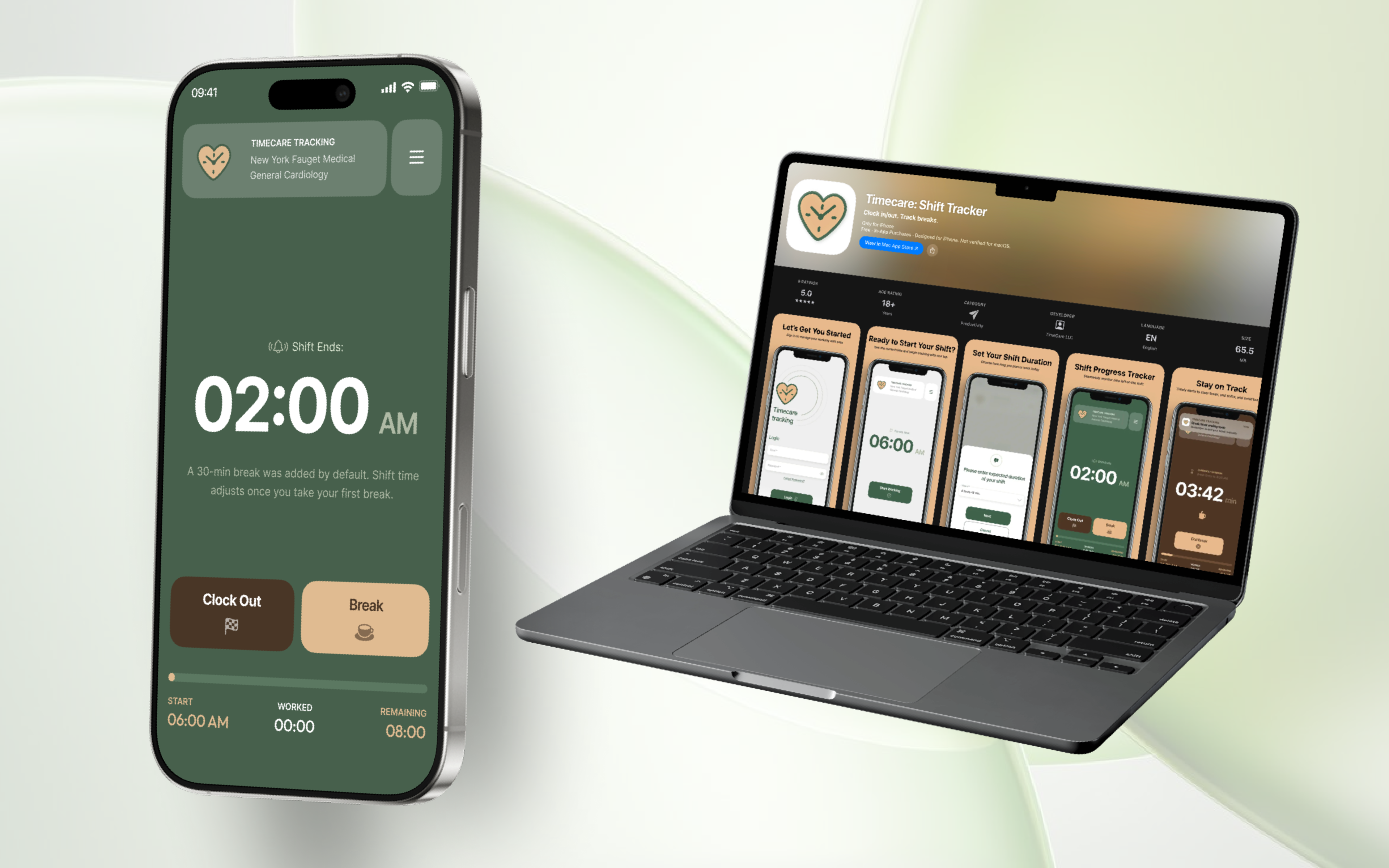
TimeCare
Mobile time tracking for healthcare staff with live shift timers, break tracking and location-aware check-in.
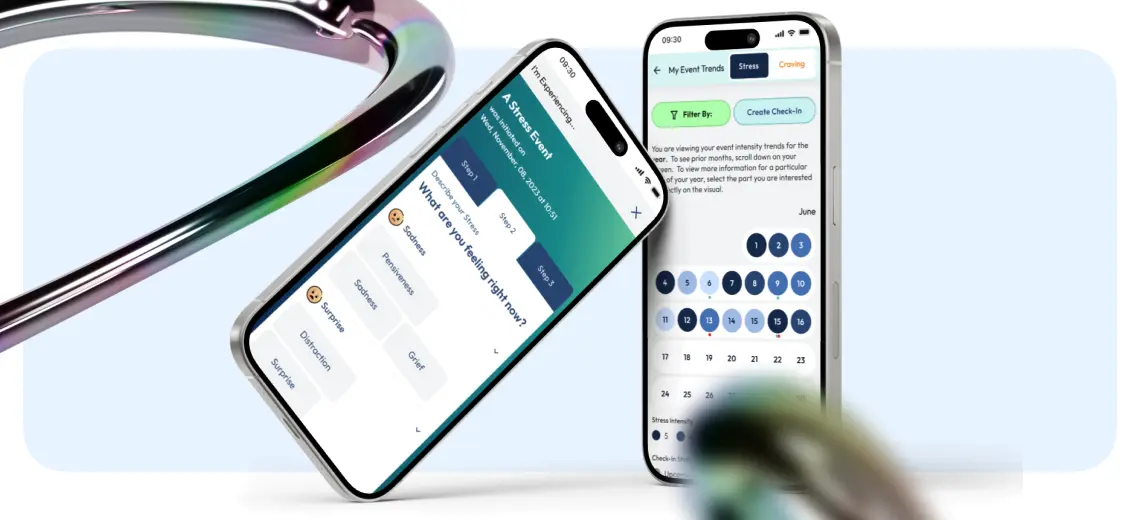
RAE Health
Clinical platform with biomarker tracking, real-time alerts and audited patient records.
What a hospital management system includes
Six modules cover most of what a packaged hospital management system gives you, and a few things it does not. Hospital management system development rarely happens in one go, and it should not: pick the department that is bleeding time, ship that, then add the next.
EHR and EMR software development
Electronic health records built around how your clinicians document, not around a certification checklist. Structured notes, orders, results, problem lists and medication history, with an interface that does not add four clicks to every encounter. If you are keeping Epic or Cerner, we build alongside them over FHIR instead of replacing them.
Patient management software and patient portal
Registration, scheduling, admissions, bed allocation and discharge in one flow, so the front desk stops phoning the ward to ask what is free. On the patient side, a portal for appointments, results, forms and bills that cuts the call volume your staff currently absorbs.
Telemedicine app development
Video consultations that write back into the record instead of living in a separate tool. Waiting rooms, triage questionnaires, remote monitoring feeds and consultation notes, on web and mobile, with the encryption and consent handling that keeps compliance quiet.
Pharmacy management software and inventory
Dispensing, stock levels, batch and expiry tracking, controlled substance records and automatic reorder points. Tied to the medication orders in the EHR, so the ward pharmacy is not reconciling two lists by hand at the end of a shift.
Medical billing software development and revenue cycle
Charge capture, coding support, claim submission, denial handling and patient statements. This is usually where the fastest return sits: a denial rate that drops two points pays for a lot of development.
Staff, resources and hospital analytics
Rostering for clinical staff, theatre and equipment scheduling, and reporting that answers board questions without three exports and an analyst's afternoon. Occupancy, length of stay, throughput and cost per case from one source.
Durations assume one module at a time with your team available for review. Two in parallel usually shortens the total, not each line. For a dedicated EHR/EMR build page, see custom EHR and EMR software development.
What hospital management software development costs
Ranges from projects we have delivered, not a price list. The final number comes out of discovery, when we know your integrations. If your budget is below the first band, say so and we will tell you what fits inside it.
One module
A single department fixed properly. Where most clients start.
Core HMS
Three to four connected modules and the data model underneath them.
Multi-facility platform
Several sites on one system, with reporting that adds up across them.
Prices are for the build. Hosting, third-party licences and clearinghouse fees sit outside and we list them separately in the estimate.
Not ready for a call yet?
Send us the list of systems you run and the module you are thinking about. You get a written ballpark and the three questions that will move the number, inside two working days. No deck, no discovery call required.
HIPAA compliant software development, handled properly
Compliance is a set of engineering decisions, not a certificate you buy at the end. Access control, encryption, audit logging and retention go into the data model in week one, because retrofitting them costs three times as much.
Technical, physical and administrative safeguards designed into the system, a signed BAA before any PHI moves, and role-based access with an audit trail your compliance officer can query. We can deploy into your own AWS or Azure account and hand over the documentation an auditor will ask for.
How a hospital software development project runs
Discovery on the ward
Two to four weeks with clinicians, admin and IT. We map the real workflow, including the paper form everyone still uses.
Architecture and compliance plan
Module order, integration approach, hosting, and how PHI moves and is logged. You get a fixed scope and a real number.
Build in sprints
Working software every two weeks in front of the people who will use it, while changes are still cheap.
Integration and data migration
HL7 and FHIR interfaces, plus the unglamorous work of moving historical records without losing them.
Phased rollout and training
One department at a time, with staff trained and the old system available until the new one has earned trust.
Support and next module
The team that wrote it keeps it running and builds the next module when you are ready. You own the repository throughout.
Why hospitals pick us as their hospital management software development company
We have shipped regulated healthcare software before
Clinical platforms with PHI, consent flows and audit requirements, not just apps with a health theme.
Clinicians are in the room
Software that adds clicks to a consultation gets abandoned. We test with the people who have to use it at 3am.
Budget you can take to the board
Clear scope per module, fixed price where the requirements allow it, and no surprise line items mid-project.
Built to outlive the project
Proven technology, documented handover and no lock-in to us. Some clients have run these systems for years.
Questions we get asked
Anything not covered here, ask us directly on a call.
How much does hospital management software development cost?+
It depends on how many modules you build and how many systems you integrate with. A single module such as a patient portal or a billing workflow is a much smaller commitment than a full hospital management system with EHR integration and data migration. We quote after discovery, when we know what your interfaces really look like. If you need a planning figure before that, tell us the module and the number of sites and we will give you a range with the assumptions written down.
How long does it take to develop a hospital management system?+
A first module usually reaches real users in four to six months, and you see working software every two weeks from the first sprint. A full multi-module system rolls out over a year or more, department by department. Data migration and EHR integration are the two things that most often move the date.
What modules should we start with?+
Whichever department is losing the most time or money. In practice that is usually patient scheduling and admissions, or billing and denials, because both show a measurable return within a couple of quarters. Clinical documentation is worth doing well, but it is rarely the cheapest place to start.
Can you integrate with our existing EHR?+
Yes. Epic, Cerner, Meditech, Allscripts and smaller systems, over FHIR R4 where it is available and HL7 v2 interfaces where it is not. Most hospitals keep their EHR and build around it, which is usually the sensible call.
How do you handle HIPAA compliance?+
We sign a BAA, design access control and audit logging into the data model rather than adding them later, encrypt PHI in transit and at rest, and can deploy into your own AWS or Azure account. You get the documentation an auditor will ask for as part of the delivery.
Can you migrate data from our current system?+
Yes, and we scope it early because it is usually messier than anyone expects. Duplicate patient records, free-text fields holding structured data, and gaps in history are normal. We run the migration in rehearsals until the reconciliation reports come back clean.
Who owns the software and what happens after launch?+
You own it from the first commit, repository and documentation included. After launch the same team stays on for support and the next module, or hands over to your in-house IT if that is the plan.
CLIENT REVIEWS
Trusted in healthcare technology
“Attract Group's efforts resulted in a bug-free app that beta users could easily navigate. The team provided frequent updates on their progress and was highly accommodating throughout the engagement. Attract Group was organized and responsive.”

“Attract Group provides outstaffing services for a fintech company. They take the time to better understand our requirements and provide the best options. Attract Group delivers on time, and their communication is quick.”

“Attract Group has deployed top-notch professionals who manage the project efficiently and ensure timely delivery of outputs. They also impress us with their transparency in their technical skills and business consulting values.”

01–03 / 06 CURATED · 39 TOTAL ON CLUTCH
Start your hospital software project
Tell us which department is losing the most time, what you run today, and what you are contractually stuck with. We will come back with a hospital management system development plan, module by module, and a number.