Will it work with our old machines?
Every generation of equipment talks a different language, and some don't talk at all. We plan for that before the first sensor is ordered.

We engineer software around how your operation actually works.
For the machines you already have
Start with one breakdown that costs real money. Connect that machine, learn its warning signs, and prove the savings before you touch the rest of the plant. We work with mixed equipment: new CNCs, 20-year-old presses, PLCs from three vendors on one floor.
Fair questions
Few maintenance managers are against IoT. Many have seen a project collect months of data and change nothing on the floor.
Every generation of equipment talks a different language, and some don't talk at all. We plan for that before the first sensor is ordered.
Sensors are cheap. Gateways, licenses, setup and upkeep are where the cost sits. If a project can't name the failure it will prevent, it's hard to justify.
Many plants have one automation engineer who's already busy keeping lines running. A new platform can't become their second job.
No. Plenty of plants want data to stay on site. We design edge-first when that's the requirement.
The basics
Signals like vibration, temperature, current draw or cycle counts show a problem developing, so you fix it during planned downtime instead of in the middle of a shift.
What we build
Reads PLCs and controllers over OPC UA, Modbus or MQTT. Older machines get add-on sensors or a small gateway.
A live view of each machine's health, with alerts when readings drift outside normal limits.
Learn the pattern behind one specific failure (a bearing, a spindle, a pump) and warn before it happens.
AI for manufacturing →Alerts create work orders in your CMMS or ERP, so the fix gets planned.
Custom ERP →Mobile screens for checklists, photos, parts used and sign-off.
Start, stop and adjust settings from a screen, with permissions and an audit log.
Architecture
Our IoT software development services follow a simple path. Local or cloud processing is your choice.
Where to start
Picking the first asset well matters more than any algorithm. We score candidates on three things:
If not, we'll suggest a different machine, or a simpler fix like a hardwired sensor and an alarm.
Proof
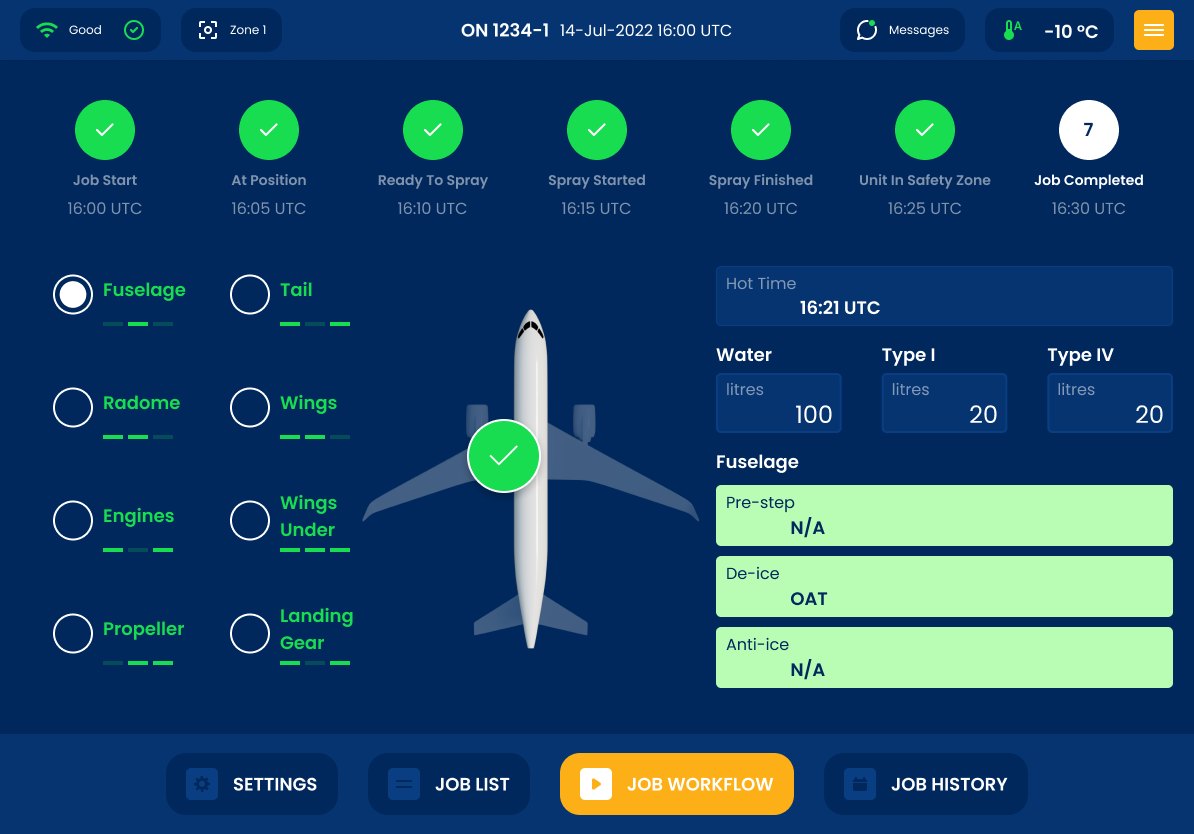 Aviation ground support · equipment data on a tablet
A tablet app for de-icing crews that reads unit data, runs the treatment step by step, keeps working when the signal drops, and records what was done.
View case study →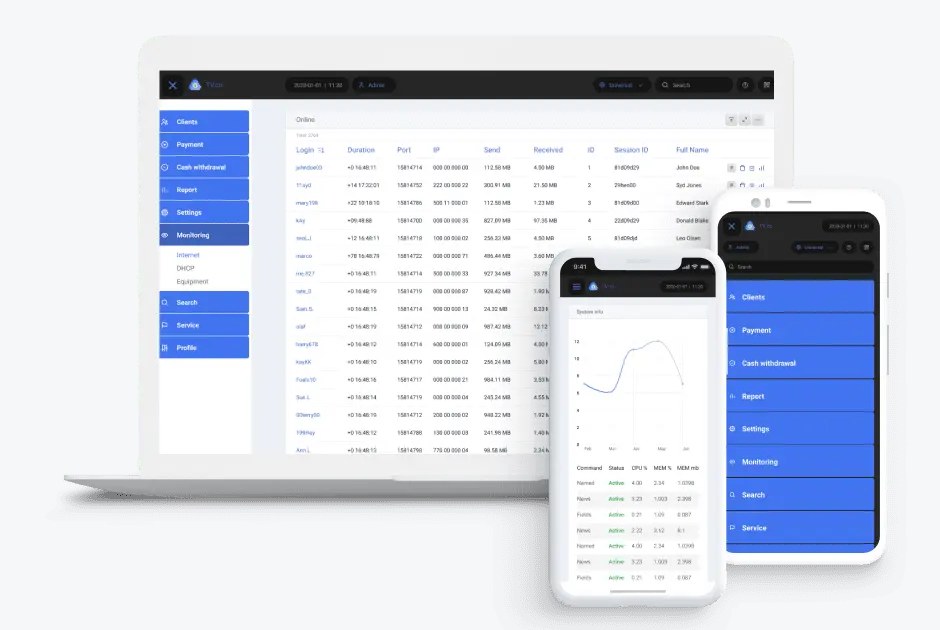 Telecom · hardware integration and remote control
One platform for an internet provider that talks to network hardware directly: automated connect, disconnect and speed control, plus live equipment monitoring.
View case study →Process
Gateways need updates, and models drift as machines age. We support the whole system and adapt it as your equipment changes.
You get the source code, configuration and documentation, and a handover that fits your automation engineer's schedule.
AI helps us analyze sensor data and write code faster. The quality of what we deliver stays our responsibility.
FAQ
Usually. If the controller exposes data, we read it directly. If it doesn't, clamp-on current sensors, vibration sensors or a simple counter can tell you a lot. For some machines a tablet check by the operator is the sensible answer, and we'll say so.
They don't. The whole system can run on a server in your plant, with the control network kept separate. Cloud is an option, never a requirement.
The ones where an hour of downtime hurts most and failures have a signal you can measure. Bottleneck machines are often the answer.
Condition monitoring and alerts help from the first week. Predicting a specific failure takes longer, often several months of data and at least a few examples of that failure. Your maintenance logs can shorten the wait.
Yes, and it's often the fastest start. We connect to what you have before adding new sensors.
Separated networks, read-only access by default, encrypted traffic, and accounts tied to roles. We follow your IT and OT security rules and document every connection.
Which protocols and controllers they've worked with, how they handle sites without cloud access, who maintains gateways after launch, and whether you'll own the code. Ask for a pilot plan built around one asset.
It's driven by the number of machines, the sensors needed and the systems to connect. You get a scope and estimate after the assessment, and you'll see working results at each stage before agreeing on the next.
Start there. Book an assessment and we'll help you pick the first machine, size the savings, and plan a pilot your maintenance team can live with.