
A retail loyalty program strategy that works answers four questions before anything else: what customer behavior are we trying to change, what data do we need to capture, how will the program connect to our existing systems, and how will we measure payback? Most loyalty initiatives stall because teams skip these decisions and jump straight to points-per-dollar math. This guide walks through each stage, from model selection to post-launch governance, so retail founders, ecommerce directors, and product leads can make informed choices whether they buy a platform, customize one, or build from scratch.
What a retail loyalty program strategy should decide first
Before evaluating vendors or writing requirements, pin down five things:
- Primary business objective. Retention lift, average order value growth, first-party data collection, or competitive differentiation. Pick one lead metric; the others become secondary.
- Customer segments that matter most. A program designed for high-frequency grocery shoppers looks nothing like one targeting occasional furniture buyers. Segment economics should drive reward structure.
- Channel footprint. In-store POS, ecommerce, mobile app, marketplace, or all of the above. Each channel adds integration scope and cost.
- Data you already have vs. data you need. If your CRM holds purchase history but no preference data, the loyalty program becomes a collection mechanism. That changes the feature set.
- Internal ownership. Loyalty programs that sit between marketing, IT, and operations with no single owner tend to launch late and iterate slowly. Assign a program owner before vendor conversations begin.
Getting these five answers documented saves weeks of rework downstream. They also become the scoring criteria when you compare build-vs-buy options later.
Program models: points, tiers, paid membership, cashback, community, and partner rewards
Loyalty has moved well beyond earn-and-burn points. The model you choose should match your margin structure, purchase frequency, and customer expectations.
- Points-based. Simple to explain, easy to implement. Works best for mid-frequency retail (fashion, beauty, home goods). Risk: points become a margin drag if redemption economics are not modeled upfront.
- Tiered. Rewards increase with spend or engagement thresholds. Effective for retailers with a wide spend distribution and a clear top-customer segment worth protecting.
- Paid membership. Customers pay an annual or monthly fee for benefits (free shipping, early access, exclusive pricing). Works when the perceived value of benefits exceeds the fee. Requires strong fulfillment and content operations.
- Cashback. Straightforward and transparent. Common in grocery, pharmacy, and fuel retail. Lower emotional engagement but high participation rates.
- Community and experiential. Access to events, content, or peer groups. Harder to scale but generates strong brand affinity in lifestyle and specialty retail.
- Partner/coalition. Shared earn-and-burn across complementary brands. Increases perceived value but adds complexity in settlement, data sharing, and governance.
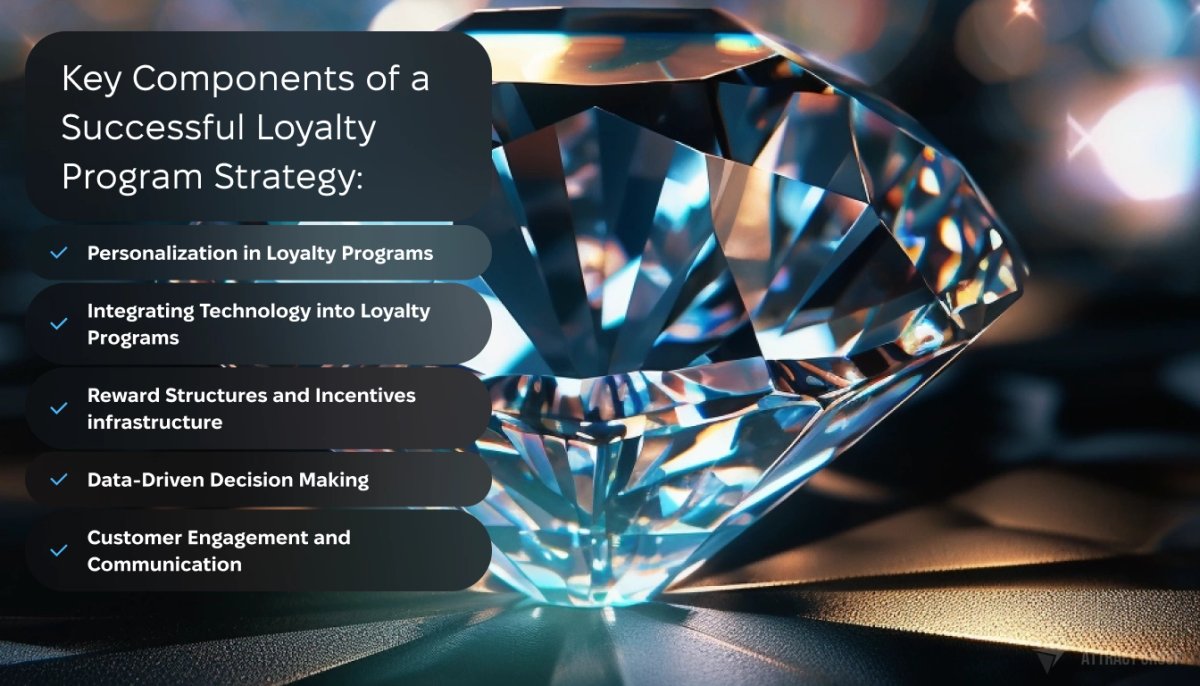
Most modern programs blend two or three of these. A fashion retailer might combine points with tiers and occasional partner rewards. The important thing is to model the unit economics of each component before launch, not after the first quarterly review reveals margin erosion.
Build vs buy vs customize: how to choose
This is the decision that consumes the most executive attention, and rightly so. It determines your speed to market, total cost of ownership, and long-term flexibility.
| Approach | Best fit | Strengths | Watch-outs | Typical timeline |
|---|---|---|---|---|
| SaaS loyalty platform | SMB retailers, Shopify/BigCommerce stores, teams without dedicated dev resources | Fast deployment (2-8 weeks), lower upfront cost, vendor-managed updates | Limited customization, platform dependency, data portability concerns, per-transaction or per-member pricing can scale poorly | 2-8 weeks |
| Customized loyalty platform (open-source or API-first base with custom development) | Mid-market retailers with specific integration or UX requirements | Faster than full custom, retains flexibility for business logic, can integrate with existing POS/CRM | Requires development partner, ongoing maintenance responsibility shifts to you, base platform constraints may surface later | 2-5 months |
| Fully custom loyalty product | Enterprise retailers, multi-brand groups, businesses with proprietary data models or complex omnichannel requirements | Full control over data, UX, integrations, and business rules; no per-member licensing fees at scale | Higher upfront investment ($50K-$200K+ depending on scope), longer build cycle, requires product management discipline post-launch | 4-9 months |
A few practical guidelines:
- If your ecommerce platform is Shopify or BigCommerce and you have fewer than 50,000 active customers, start with a SaaS plugin. You can migrate later if you outgrow it.
- If you operate physical stores with POS systems that need real-time loyalty recognition, a SaaS plugin alone rarely covers the full requirement. Plan for custom integration work or a customized platform.
- If loyalty is a core differentiator (your competitive position depends on the program experience), a fully custom build gives you the most room to iterate. Attract Group delivered this type of product for Kopiika digital loyalty program, a retail loyalty system spanning web, iOS, and Android with CRM sync, promotions, store routing, and an admin panel, completed over six months with ongoing support.
For a deeper comparison of platform options, see our review of loyalty program software.
Want to boost customer loyalty?
Get a free consultation on building an effective loyalty program catered to your retail business
Integrations that make or break retail loyalty
A loyalty program that cannot talk to your POS, ecommerce engine, CRM, and communication tools will create fragmented experiences and dirty data. These are the integration layers to plan for:
POS integration. In-store earn and redeem must happen in real time at the register. This means API-level integration with your POS provider (Square, Lightspeed, Oracle Retail, custom). Latency above two seconds at checkout creates friction that staff and customers will resist.
Ecommerce platform. The loyalty module needs to read cart contents, apply rewards, and update member balances during checkout. For headless commerce setups, this means building against the commerce API layer rather than relying on front-end plugins.
CRM and CDP. Loyalty data (tier status, points balance, redemption history) should flow into your CRM software development stack so that marketing, sales, and support teams see a unified customer profile. Without this, your email campaigns and service interactions will ignore loyalty context.
Communication channels. Transactional messages (points earned, tier upgrade, reward expiring) need to fire through email, SMS, or push notification systems. Map these triggers during requirements, not after launch.
Analytics and BI. Loyalty event data (enrollments, earn events, redemptions, lapses) should land in your data warehouse or BI tool so you can run cohort analysis and ROI reporting without depending on the loyalty vendor's dashboard alone.
If your tech stack is complex or spans multiple brands, consider working with a team experienced in e-commerce software development to map integration dependencies before selecting a loyalty platform.
Implementation roadmap: from discovery to launch
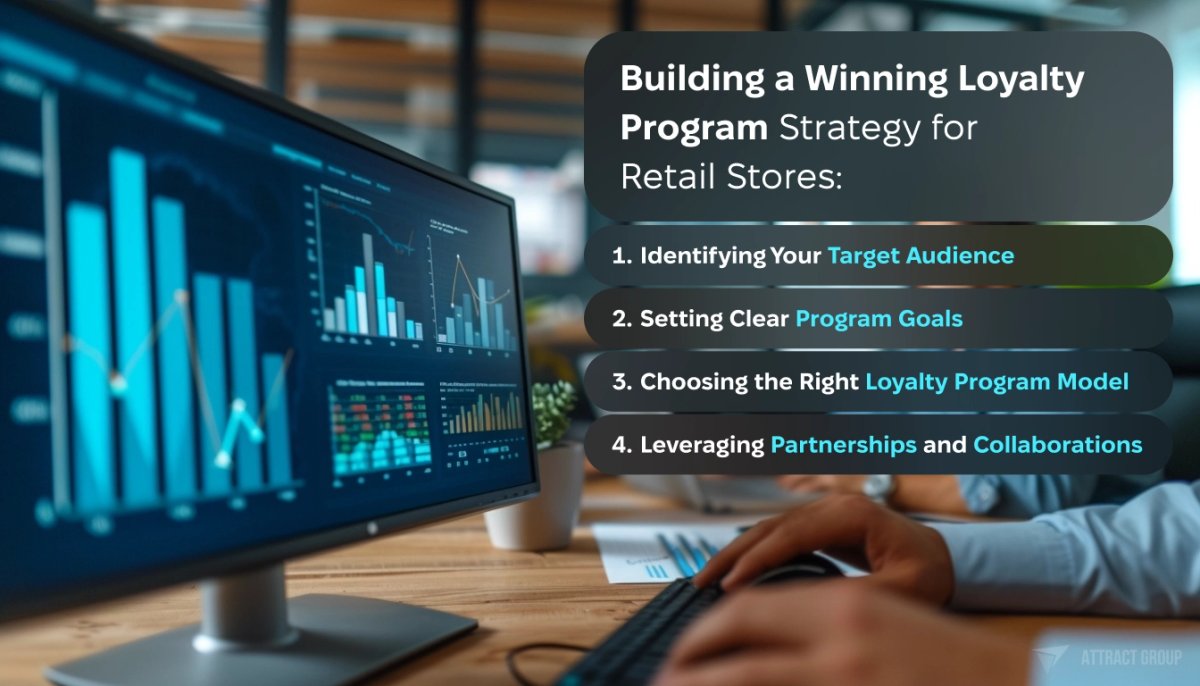
A realistic implementation follows these phases. Timelines assume a customized or custom build; SaaS deployments compress the middle phases.
Phase 1: Discovery and requirements (2-4 weeks). Document business objectives, customer segments, reward economics, integration inventory, and success metrics. Output: a requirements brief and integration map.
Phase 2: Architecture and vendor/partner selection (2-3 weeks). Decide build/buy/customize. If building or customizing, select a development partner. If buying SaaS, run a structured evaluation against your requirements brief.
Phase 3: Design and prototyping (3-5 weeks). UX design for member-facing flows (enrollment, earn, redeem, account management) and admin-facing flows (campaign setup, reporting, member management). Prototype and test with internal stakeholders and a small customer panel.
Phase 4: Development and integration (6-14 weeks). Build core loyalty engine, integrate with POS/ecommerce/CRM, develop communication triggers, and build reporting dashboards. Run integration testing with live transaction data in a staging environment.
Phase 5: Pilot and soft launch (2-4 weeks). Roll out to a limited store set or customer segment. Monitor data flow, redemption accuracy, and staff adoption. Fix integration bugs before full launch.
Phase 6: Full launch and optimization (ongoing). Scale to all channels. Begin A/B testing reward structures, communication cadence, and tier thresholds. Review program economics monthly for the first quarter, then quarterly.
Let us help build your loyalty program
Our team of experts can craft a customized loyalty solution for your retail store
Metrics, ROI, and governance
Loyalty programs that lack measurement discipline become cost centers within two quarters. Track these metrics from day one:
- Enrollment rate. Percentage of eligible customers who join. Below 20% at checkout suggests friction in the enrollment flow or weak value proposition.
- Active member rate. Percentage of enrolled members who earned or redeemed in the last 90 days. Industry benchmarks vary, but Queue-it reports that active participation rates for top programs often exceed 60%.
- Repeat purchase rate among members vs. non-members. This is the clearest signal of program impact on retention.
- Incremental revenue per member. Compare average order value and purchase frequency for members against a matched non-member cohort.
- Redemption rate. Too low means rewards feel unreachable; too high means you are giving away margin without changing behavior.
- Program cost as a percentage of incremental revenue. If the program costs 3% of revenue but drives 8% incremental lift among members, the economics work. If costs exceed the lift, restructure rewards before scaling.
Governance. Assign a program owner (typically in marketing or commercial) with a dotted line to IT for integration health. Hold monthly reviews covering enrollment trends, redemption economics, integration uptime, and customer feedback. Revisit tier thresholds and reward values at least twice per year.
For retailers exploring AI-driven personalization of offers and reward recommendations, AI integration services can layer machine learning models on top of loyalty transaction data to improve targeting precision over time. Recent loyalty research point to AI-driven personalization and flexible reward structures as the direction loyalty programs are heading through 2026 and beyond.
When a custom loyalty product makes sense
Not every retailer needs a custom build. But several conditions make it the stronger choice:
- You operate across physical and digital channels and need real-time loyalty recognition at POS, on web, and in a mobile app with a single member profile.
- Your reward logic is non-standard. Coalition programs, dynamic pricing-linked rewards, or gamified engagement mechanics often exceed what SaaS platforms support without heavy workarounds.
- You want to own your data. SaaS platforms hold your member and transaction data on their infrastructure. If first-party data ownership is a strategic priority, a custom product on your own infrastructure gives you full control.
- You plan to scale across brands or geographies. Multi-brand loyalty with shared and brand-specific tiers, currencies, or partner networks is difficult to configure in off-the-shelf tools.
- Per-member SaaS pricing becomes uneconomical. Once you pass 200,000-500,000 active members, the annual licensing cost of some SaaS platforms exceeds the amortized cost of a custom build.
If several of these conditions apply, a custom software development approach typically delivers better long-term ROI despite the higher upfront investment.
Let’s discuss your loyalty program
Connect with our experts to start planning a strategic loyalty initiative
Next steps
Start with the five strategic decisions outlined at the top of this guide. Document them in a one-page brief. Use that brief to evaluate whether a SaaS platform, a customized solution, or a fully custom product fits your situation. Map your integration requirements early, because integration gaps are the most common reason loyalty launches slip or underperform. Set your measurement framework before writing a single line of code or signing a vendor contract. And assign a program owner who can make decisions across marketing, product, and IT without waiting for committee approval.
A well-executed retail loyalty program strategy turns transactional customers into repeat buyers and gives you the first-party data to personalize every interaction. The retailers who get this right treat loyalty as a product, not a promotion, and invest accordingly.