
A high-performing team is not a group that survives through overtime, constant escalation, or one exceptional person holding delivery together. It is a team that can turn business goals into working outcomes with clear roles, shared goals, owned decisions, open communication, constructive conflict, delivery discipline, continuous learning, and adaptive leadership.
High-performing teams at a glance
High-performing teams make execution visible. Leaders can see who owns what, where decisions happen, how work moves, and whether people can raise risk early. The table below gives you a practical diagnostic view: the trait, the observable behavior, the warning sign, and the first leadership action to take.
| Trait | What it looks like | Warning sign | Leader action |
|---|---|---|---|
| Role clarity | People know their responsibilities, decision rights, and handoff points. | Work is duplicated, missed, or escalated too late. | Map roles, ownership, and decision paths for current work. |
| Shared goals | The team understands the business outcome, not only the task list. | People optimize for local tasks instead of product or delivery impact. | Translate goals into measurable outcomes and review them often. |
| Decision ownership | Decisions have owners, inputs, and time limits. | Decisions drift across meetings with no closure. | Assign decision owners before discussion starts. |
| Open communication | Risks, dependencies, and trade-offs are raised early. | Status looks green until a deadline is already at risk. | Create a no-surprise operating rhythm. |
| Constructive conflict | People challenge plans, assumptions, and estimates without personal attacks. | Disagreement moves to private chats or turns into blame. | Separate problem review from personal judgment. |
| Delivery discipline | The team plans realistically, manages work in progress, and keeps commitments visible. | Sprint plans, roadmaps, or release dates change without learning from misses. | Measure flow, blockers, rework, and estimation patterns. |
| Continuous learning | The team improves how it works, not only what it ships. | Retrospectives repeat the same problems. | Turn lessons into owned process changes. |
| Adaptive leadership | Leaders set context, remove blockers, and adjust support as the team matures. | Managers either micromanage or disappear. | Match leadership style to the team's current risk and capability. |
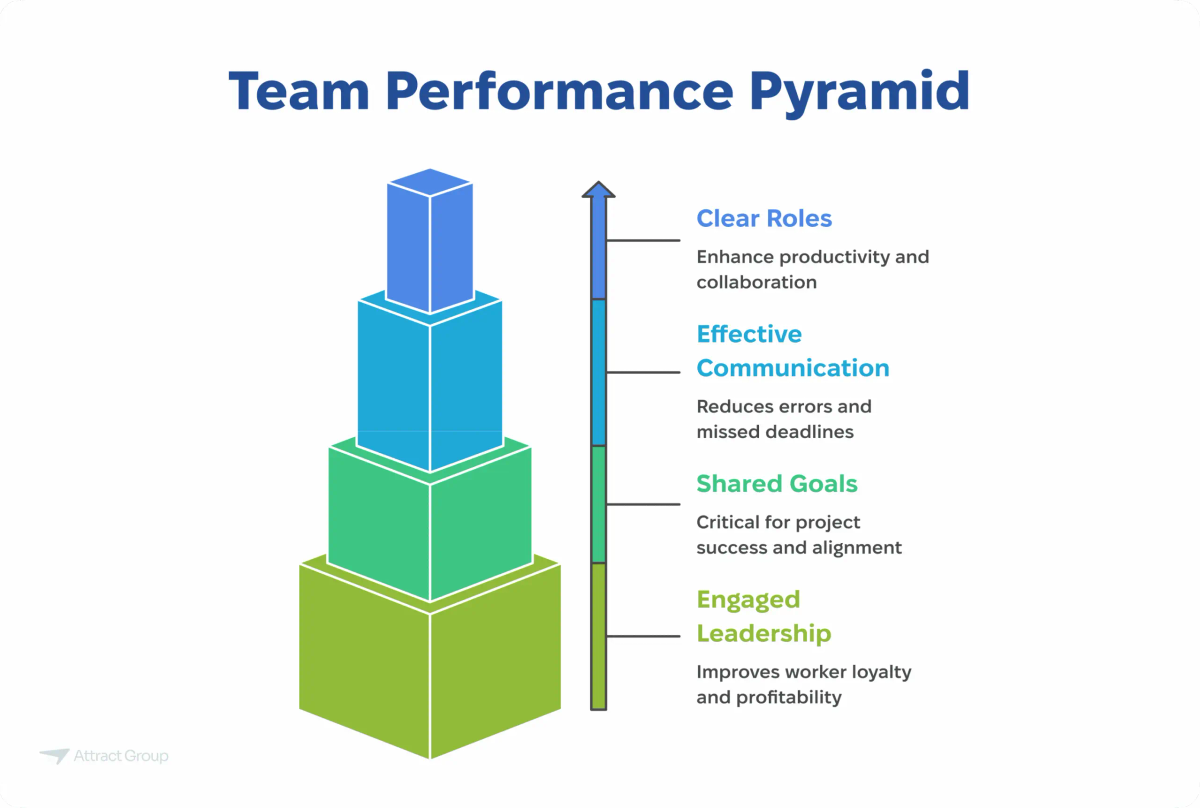
This diagnostic view matters because weak performance rarely comes from one missing trait. A team may have talented engineers but unclear ownership. It may communicate often but avoid hard decisions. It may have strong process ceremonies but no real accountability. Leaders need to identify the constraint before adding more meetings, tools, or people.
Psychological safety and accountability must work together
Psychological safety is useful when it helps a team expose risk, challenge weak plans, and make better decisions. It should not become a soft culture slogan or an excuse for avoiding commitments. In strong teams, people can speak honestly and still own outcomes, deadlines, trade-offs, and quality. Google's Project Aristotle is often cited because it found psychological safety to be a major factor in effective teams. The practical lesson is not "be nice." The lesson is that people must be able to say, "This estimate is unrealistic," "This architecture decision is risky," or "We do not have enough discovery to commit." For software teams, that matters because uncertainty is built into the work. Requirements change. Technical debt appears at the worst time. Integrations behave differently in production. A team that hides these facts to protect harmony will miss signals until the cost is higher. Research on psychological safety in agile software development teams, including a survey of 236 members across 43 teams, also treats psychological safety as something observable in real delivery settings, not as a motivational phrase. Leaders should use that framing: ask what people can safely raise, how the team responds, and whether concerns lead to action. Accountability completes the model. If a team feels safe but has no ownership, work drifts. If a team has accountability without safety, people protect themselves, hide bad news, and wait for instructions. The productive zone is both: direct feedback, clear expectations, and fast escalation of risk.
The 8 characteristics of high-performing teams
The eight traits below form an operating model for software and product work. They help leaders move from vague complaints, such as "the team is slow," to specific fixes. Each trait should be visible in planning, delivery, meetings, decisions, stakeholder communication, and how the team learns after release.
1. Role clarity
Role clarity means every person understands what they own, what they influence, and where they need input from others. In software delivery, unclear roles create silent delays. Product assumes engineering is validating feasibility. Engineering assumes product is managing stakeholder priority. QA assumes acceptance criteria are complete. No one sees the gap until late. For founders, CTOs, and delivery managers, the fix starts with a simple ownership map. Define who owns product direction, requirements, architecture, technical decisions, delivery tracking, release readiness, stakeholder updates, and risk escalation. Then compare that map with how work actually moves. Role clarity should also include boundaries. A senior engineer may advise product trade-offs, but not own business priority. A product manager may shape scope, but not overrule technical risk without discussion. Clear roles reduce friction because people know when to decide, when to consult, and when to escalate.
2. Shared goals
A high-performing team understands the outcome behind the work. "Build the feature" is not enough. The team should know whether the goal is reducing manual operations, improving conversion, shortening onboarding time, cutting support tickets, or enabling a new revenue stream. Shared goals create better trade-offs. If the goal is speed to market, the team can choose a narrow first release. If the goal is reducing operational errors, the team may prioritize workflow controls and audit trails. If the goal is retention, user experience and reliability may matter more than extra scope. Leaders should keep goals visible during planning and review. When priorities change, explain why. Teams can handle change better when they understand the business reason. They struggle when change arrives as unexplained task churn.
3. Decision ownership
Slow teams often do not have a capacity problem. They have a decision problem. Work waits because no one knows who can approve a scope change, accept a technical trade-off, unblock a dependency, or close a stakeholder dispute. Decision ownership requires three things: a named owner, a deadline, and clear input. Not every decision needs consensus. Some need advice. Some need approval. Some need one accountable person to decide after hearing the risks. For product and software teams, define decision types in advance. Product priority, architecture, design acceptance, release timing, security exceptions, and budget changes should not all use the same decision path. When decision rights are explicit, meetings become shorter and delivery becomes more predictable.
4. Open communication
Open communication is not more chat messages or more meetings. It is the reliable movement of relevant information to the people who can act on it. In strong teams, risks are raised early, dependencies are visible, and bad news is not softened until it becomes useless. Leaders should pay attention to the quality of status reporting. A weak status update says, "We are working on it." A useful update says, "The API integration is blocked by missing vendor credentials. If not resolved by Thursday, release moves by one week. Owner: Alex. Escalation needed from procurement." Open communication also includes stakeholders. Business stakeholders do not need every technical detail, but they do need clear trade-offs, risk, cost, and delivery impact. If communication is vague, stakeholders start bypassing the team, and trust drops.
5. Constructive conflict
Conflict is not the problem. Poorly managed conflict is the problem. High-performing teams challenge assumptions before those assumptions become expensive. They debate architecture, scope, estimates, user flows, acceptance criteria, and release risk without turning disagreement into status games. Constructive conflict needs rules. Debate the work, not the person. Bring evidence where possible. State the trade-off. Decide how closure happens. Record the decision and the reason. This prevents the same argument from returning in every meeting. Avoiding conflict creates false harmony. People nod in planning, then resist in execution. Engineers build around unclear requirements. Product owners accept timelines they do not believe. QA receives work too late. The result is rework, resentment, and missed commitments.
6. Delivery discipline
Delivery discipline is the habit of making work, risk, and progress visible. It includes planning, backlog health, estimation, work in progress limits, dependency tracking, quality gates, release readiness, and post-release review. This does not mean heavy process. A small team may need a light Kanban board, short planning cycles, and a clear release checklist. A larger product organization may need portfolio visibility, dependency management, and more formal governance. The process should match delivery risk. High-performing teams also measure flow. They look at cycle time, blocked work, rework, escaped defects, deployment frequency, and predictability. These metrics are not for punishment. They help the team see where the system slows down.
7. Continuous learning
Continuous learning means the team changes how it works based on evidence. Retrospectives are only useful if they lead to owned actions. Post-release reviews are only useful if they change planning, testing, discovery, or architecture decisions. Software teams should learn at several levels. At the product level, did the release solve the user or business problem? At the delivery level, what slowed the team down? At the technical level, what debt, defects, or architecture choices created cost? At the collaboration level, where did communication fail? A common failure is repeating lessons without changing the system. If every retrospective says "requirements were unclear," then the fix may be better discovery, stronger business analysis, earlier technical review, or clearer acceptance criteria.
8. Adaptive leadership
Adaptive leadership means leaders change their support based on team maturity, delivery risk, and business context. A new team may need close direction, explicit working agreements, and frequent check-ins. A mature team may need space, trust, and fast access to decisions. Good leaders remove blockers instead of becoming the bottleneck. They provide context, protect focus, resolve priority conflict, and make sure the team has the right skills and tools. They also know when behavior is not the real issue and the operating system around the team must change.
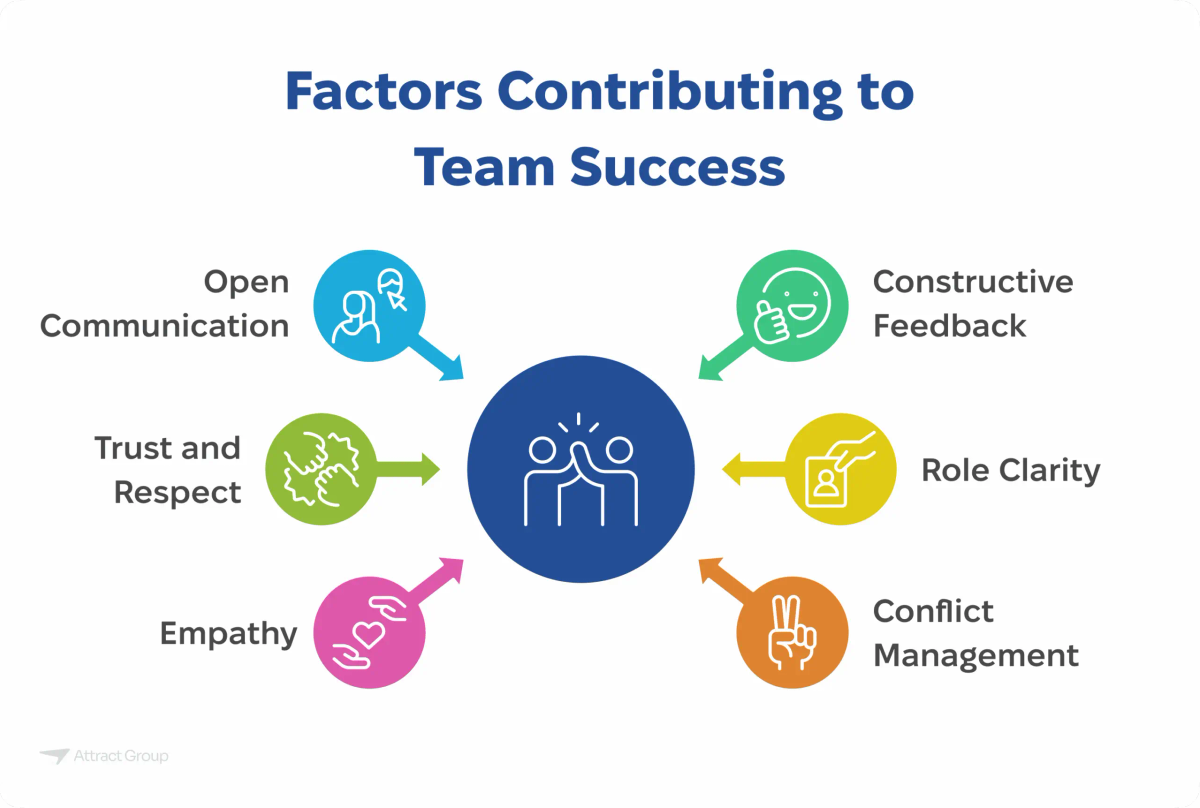
Leadership also includes team-building, but it should be practical. The best team-building often happens through shared problem solving: improving a release process, reducing handoff friction, clarifying decision rights, or fixing a painful workflow. Social connection helps, but it cannot replace operating clarity.
How to build a high-performing team without relying on heroics
Building a high-performing team starts by removing ambiguity from the work system. Do not begin with slogans or broad culture campaigns. Start with outcomes, ownership, communication rules, feedback loops, and blockers. The goal is to make good execution repeatable instead of dependent on overtime or individual rescue.
- Clarify outcomes before assigning tasks. Define what business result the team is expected to produce. For example: reduce onboarding time by 30 percent, launch a self-service portal, replace manual approval steps, or stabilize release quality. Clear outcomes help the team make better scope and technical decisions.
- Map roles and decision rights. Write down who owns product priority, requirements, technical direction, delivery tracking, release approval, and stakeholder communication. If two people own the same decision, define who has the final call.
- Create working agreements. Agree how the team plans work, handles blockers, reviews code, escalates risk, documents decisions, and communicates with stakeholders. Working agreements should be short enough to use and specific enough to enforce.
- Shorten feedback loops. Long feedback loops hide problems. Use frequent demos, stakeholder reviews, backlog refinement, design reviews, and release checks. The point is not ceremony. The point is earlier correction.
- Measure flow, not activity. Activity metrics can reward busyness. Flow metrics show whether work is moving. Track cycle time, blocked items, rework, carryover, defect trends, and delivery predictability.
- Remove blockers at the system level. If approvals take two weeks, no team ceremony will fix speed. If environments are unstable, delivery estimates will fail. If backlog items lack acceptance criteria, engineering will guess. Leaders should remove structural blockers, not only ask the team to work harder.
- Invest in useful tooling. Tools should reduce coordination cost. A workflow system, delivery dashboard, documentation space, test automation setup, or integration platform can improve execution when the process is clear. Tooling will not save a confused operating model, but it can support a good one.
- Develop leadership inside the team. High-performing teams do not wait for one manager to solve every issue. Product, engineering, QA, design, and delivery leads should each own part of team health. Shared leadership makes the team more resilient.
When team performance problems are really system problems
If several capable people keep missing commitments, the team may not be the root cause. Many delivery problems come from the surrounding system: unclear requirements, unstable priorities, weak governance, manual workflows, poor tooling, missing skills, or an operating model that no longer fits the business.
| Performance problem | Likely system cause | Fix | Owner |
|---|---|---|---|
| Estimates are often wrong | Requirements are vague or discovery is too shallow | Improve analysis, acceptance criteria, and technical review | Product and business analysis |
| Work waits between teams | Handoffs and dependencies are unmanaged | Map workflow, set dependency rules, and assign owners | Delivery management |
| Team is busy but output is low | Too much work in progress or priority switching | Limit active work and protect focus | Product and delivery leads |
| Quality drops near release | Testing, review, or release readiness starts too late | Add quality gates and earlier validation | Engineering and QA |
| Stakeholders lose trust | Status reporting hides trade-offs until late | Use risk-based reporting and decision logs | Project management |
| Senior people are overloaded | Critical knowledge sits with too few people | Cross-train, document, and adjust staffing | Engineering leadership |
This is where outside delivery support can help. A team may need stronger business analysis to turn goals into clear requirements, project management to improve delivery control, custom software development to replace manual workflows, or staff augmentation to fill skill gaps without slowing execution.
The main leadership test is whether you can separate symptoms from causes. A conflict-prone team may need clearer decision rights. A slow team may need fewer priorities. A dependent team may need better documentation and cross-training. A burned-out team may need scope control, not another motivational workshop.
Find the Real Delivery Constraint
Review team structure, requirements flow, workflow tooling, and delivery ownership before performance problems turn into permanent process debt.
FAQ
These short answers are useful when leaders need a shared language for team improvement. Use them to reset expectations before changing process, structure, tooling, or staffing. The main point: high performance is designed through habits, ownership, and systems, not demanded through pressure.
What are high-performing teams?
High-performing teams are groups that consistently turn business goals into working results through clear ownership, strong communication, realistic planning, constructive conflict, and continuous learning. They do not depend on heroics to meet commitments.
What are the most common characteristics of high-performing teams?
The common traits are role clarity, shared goals, decision ownership, open communication, constructive conflict, delivery discipline, continuous learning, and adaptive leadership. In software teams, these traits should be visible in planning, delivery, review, and release decisions.
How do you build a high-performing team?
Start with outcomes, roles, decision rights, and working agreements. Then shorten feedback loops, measure flow, remove blockers, and improve tooling where it reduces coordination cost. Do not add process before diagnosing the constraint.
Why do high-performing teams need psychological safety?
They need psychological safety so people can raise risk, challenge assumptions, admit uncertainty, and improve decisions early. It works best when paired with accountability, clear commitments, and direct feedback.