Dispatch board
A live board of loads, trucks and drivers. Our dispatch software development starts from how your dispatchers already work. Assign work in a few clicks and see conflicts early.

We engineer software around how your operation actually works.
For fleets that outgrew spreadsheets
Google Sheets, a group chat and a good dispatcher can run a small fleet. Past a couple of dozen vehicles, work gets done twice and things slip. Our fleet management software development services put loads, trucks and drivers on one board, on top of the ELD and GPS data you already have.
Threshold
Modules
Fleet management software development usually starts with dispatch and a driver app. Other modules follow.
A live board of loads, trucks and drivers. Our dispatch software development starts from how your dispatchers already work. Assign work in a few clicks and see conflicts early.
Every truck on one map, with history. Geofences around yards, customers and restricted areas trigger arrival notices, detention timers or alerts.
Jobs, stops, documents and messages in one place. Drivers capture PODs, photos and pre-trip inspections (DVIR) on the phone.
Service schedules by mileage or engine hours, work orders, parts used, and repair history per vehicle. Defects from a DVIR open a work order on their own.
Hours of service from your ELD, IFTA mileage by state, and reminders for licenses, medical cards and DOT inspections. Audit-ready reports instead of a folder hunt.
Fuel card data, tolls, repairs and driver pay tied to each vehicle and each job, so you see which trucks and lanes make money.
Harsh braking, speeding and idling turned into simple scores, with dash cam events attached where your camera provider allows it. Coaching notes stay on the driver's record.
Utilization, empty miles, on-time delivery, cost per mile. Reports you choose, not 40 charts nobody opens.
Segments
Mixed fleets with electric vehicles get battery level and charging stops in the same view.
Loads, HOS, IFTA, settlements.
Many stops, tight windows, proof of delivery.
Technicians, vans, parts on board, job notes.
Machines and trailers as assets, engine hours, site moves.
Shuttles and buses, schedules and inspections.
Telematics
You already pay for telematics. Most of that data ends up on a map nobody has time to watch. We connect to your telematics provider through its API and turn the data into tasks:
Late deliveries can push an updated ETA to the customer. Route optimization →
Adoption
Drivers already juggle the ELD, the phone and the paperwork. Another clumsy app won't get used. Our rules:
We test early versions with a few of your drivers and change what annoys them.
Integrations
The system sits in the middle of tools you already run:
We check each provider's access rules during discovery. A failed sync raises an alert instead of a silent gap.
Process
We sit with dispatch, drivers and the shop, from the first call to the last delivery, and list what gets typed twice.
Usually the dispatch board and driver app. You get a written estimate.
Dispatchers and a few drivers try it and tell us what's wrong.
Working software on real loads, shown to you every sprint.
One terminal or one team first, then the rest of the fleet.
We stay after launch, fix issues and add maintenance, compliance or reports as the next steps.
Cost
Per-vehicle SaaS pricing grows with the fleet. With custom fleet management software, you pay for the build and for support, and adding a truck doesn't change the bill. For example, a 50-truck fleet paying $100 to $150 per vehicle each month spends $60,000 to $90,000 a year on subscriptions — an illustration from industry research, not a quote. We put your real numbers next to a custom build before you decide.
Cost depends on modules in the first release, whether you need a driver app, ELD, fuel card and accounting integrations, and the number of user roles and locations. If an off-the-shelf tool covers your needs at a fair price, keep it. We can build only the pieces it's missing.
Ownership
Hiring a fleet management software development company shouldn't lock you in. The code is yours, with documentation, so any team can take it over. Role-based access, encrypted data, backups, and hosting in the cloud or on your servers. Releases you can trust: automated tests and a way to roll back each release. Support after launch, with response times agreed up front. We use AI to speed up coding and testing. People on our team check and own each change.
Proof
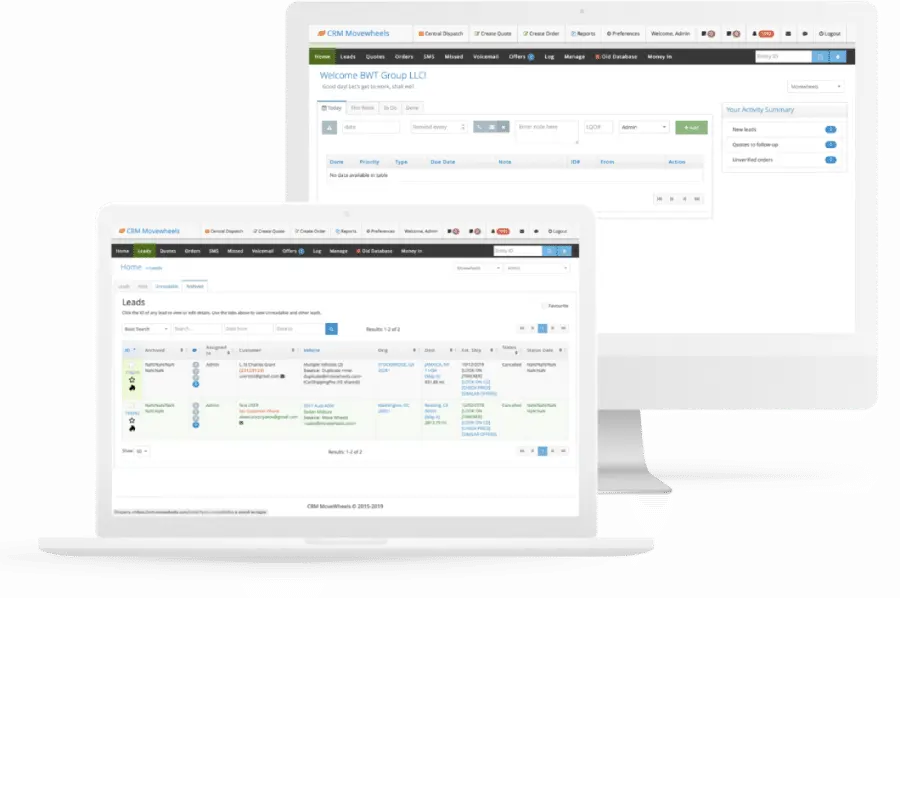
Auto transport CRM with automated quoting and dispatch workflows, connected to Central Dispatch and uShip, Google Maps, and Twilio and Bandwidth for calls and texts with customers and carriers.
View case study →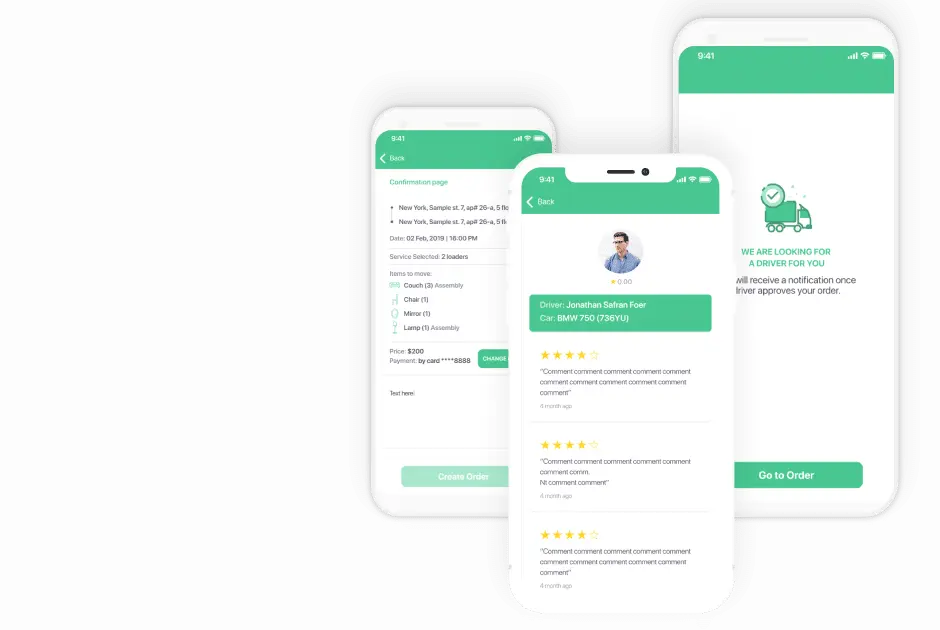
On-demand delivery app with driver verification and live tracking — adjacent experience in driver apps and tracking.
View case study →Related: TMS · Route optimization · Industrial IoT · Logistics hub
Engagement
Dispatch board and driver app first, priced up front.
For fleets that keep adding modules and locations.
We join your in-house IT on software you already have.

CLIENT REVIEWS
“We know our project is complicated because we need to integrate and make different systems work. The work meets our expectations, and we haven't identified any data gaps.”
“Attract Group delivered a high-quality product on a tight deadline. They continue to impress with their knowledge on all things related to development. They're very professional and easy to communicate with.”
“I'm most impressed with Attract Group's commitment. The work meets our expectations, and the new app offers great flexibility for future improvements and better customer service.”
01–03 / 03 CURATED · 39 TOTAL ON CLUTCH
FAQ
It depends on modules, integrations and whether you need a driver app. Many fleets start with the dispatch board and driver app, then add the rest. You get a written estimate after we see your dispatch day.
A first release with dispatch and a driver app usually lands in a few months. Each later module is a smaller step.
There's no fixed number. The signal is when growth means hiring someone to copy data, or when a missed service date or a forgotten load starts costing real money.
In most cases. We connect through your provider's API and check its access rules during discovery. Switching hardware isn't part of the plan.
Yes. Drivers can finish stops, take photos and capture PODs offline. Everything syncs when the phone is back online.
Yes, if your vehicles or chargers share data. Battery level, range and charging stops can sit next to the rest of the fleet.
No. It takes the copying and chasing off their plate, so each dispatcher can handle more trucks.
Yes. Loads, costs and driver pay can sync with your TMS and your accounting system or ERP.
Ask which ELD and telematics providers they've connected, how the driver app works offline, and who owns the code. With us, you do.
From the first call to the last delivery. We'll show you where the time goes and what to build first.